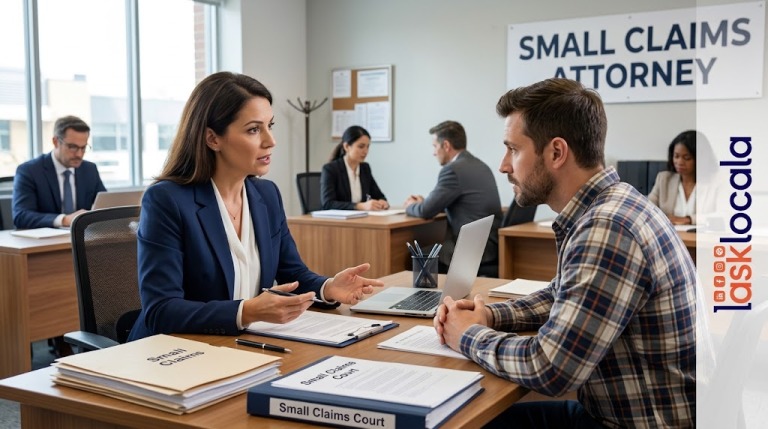
Do You Need a Small Claims Attorney? A Complete Guide for Claimants and Defendants
Small claims court was built so ordinary people could resolve money disputes without hiring a lawyer but “built for self-representation” and “best handled alone” aren’t always the same thing. This guide breaks down exactly when a small claims attorney earns their fee, when you’re better off going it alone, and how to make the right call for your specific case.
What Small Claims Court Actually Handles
Small claims court is a stripped-down civil court designed to resolve disputes over money usually somewhere between a few thousand and around fifteen thousand dollars, depending on where the case is filed. It skips most of the formal rules that slow down regular civil litigation: there’s typically no jury, filing fees are modest, paperwork is simplified, and a case that would take years in a standard courtroom can often be resolved in a few months.
The trade-off for that speed is that small claims court can only do one thing: decide whether one party owes another party money, and how much. It generally cannot order someone to perform a specific action, force a business to honor a non-monetary contract term, or grant the kind of broad relief available in a standard civil lawsuit. If your dispute doesn’t fit that narrow lane or the amount you’re owed is larger than your local cap you may need a civil litigation lawyer instead, working in a higher court.
Typical small claims disputes include unpaid invoices, security deposit fights, property damage, breach of a simple contract, unreturned personal property, and minor personal injury claims. It’s this everyday, dollars-and-cents nature of the court that makes people assume a lawyer is unnecessary. Often that’s true. Sometimes it’s a costly assumption.
In most states, you are not legally required to hire an attorney for small claims court, and in a handful of states you’re not even permitted to bring one. But “not required” doesn’t mean “not useful.” A small claims court lawyer can shape your case before you ever step into the courtroom through case evaluation, a well-timed demand letter, and evidence preparation even in jurisdictions where they can’t stand up and argue for you at the hearing itself.
Do You Really Need a Small Claims Attorney?
The honest answer is: it depends on the case, not the court. Small claims court was intentionally designed for laypeople, and judges in these courtrooms are used to guiding self-represented parties through the process. For a simple, well-documented dispute a landlord who didn’t return a deposit, a contractor who was paid but never showed up, a friend who won’t repay a loan backed by a text message trail most people can present their own case competently.
Where that confidence breaks down is when the facts get messy, the other side lawyers up, or the legal theory behind your claim isn’t obvious. A small claims attorney’s real value isn’t courtroom theatrics it’s knowing which facts matter, which don’t, and how to package your evidence so a judge can rule in your favor in the ten or fifteen minutes your case will realistically get.
Self-representation usually works when…
- The facts are simple and undisputed
- You have clear documentation (receipts, texts, photos, a contract)
- The claim amount is modest relative to attorney fees
- The other party also has no legal representation
- Your state doesn’t allow attorneys in the courtroom anyway
An attorney earns their fee when…
- The other side has already hired legal counsel
- Liability or damages are genuinely disputed
- A business entity or corporation is involved
- The claim is near your state’s dollar limit
- You’re unsure the law is even on your side
Where Attorneys Are Allowed and Where They’re Not
One detail that trips people up is that attorney involvement in small claims court isn’t uniform nationwide it varies by jurisdiction, and sometimes by county within the same state. Before you assume a lawyer can walk into the hearing with you (or that you’ll be facing one across the aisle), it’s worth checking the local rule, since the categories generally break down like this:
| Category | What It Typically Means |
|---|---|
| Attorneys freely permitted | Either party may retain counsel to appear and argue the case at the hearing, just like in any other civil matter. |
| Attorneys restricted or barred | Some courts limit representation to the parties themselves (plus, in limited cases, a corporate representative), reserving attorney appearances for exceptional circumstances or appeals only. |
| Conditional / notice-based rules | A party may only bring an attorney if they formally notify the court and the opposing side in advance often giving the other party the right to retain counsel too once notice is filed. |
| Business entities | Corporations and LLCs are frequently required to appear through a licensed attorney or an authorized employee/officer, since a business generally cannot “represent itself” the way an individual can. |
Crucially, even where an attorney can’t stand beside you at the podium, that doesn’t shut them out of the process entirely. A small claims lawyer can still evaluate your case, draft a demand letter before you file, help you organize evidence, prepare you for what the judge will ask, and step back in afterward if you need help collecting a judgment. Many attorneys structure exactly this kind of arrangement, discussed more below under limited-scope representation.
What a Small Claims Attorney Actually Does
People often picture a small claims lawyer purely as courtroom talent, but the highest-value work usually happens long before the hearing date. Here’s what a good small claims court lawyer brings to a case, start to finish:
1. Honest case evaluation
Before you spend a single filing fee, an attorney can tell you whether you actually have a viable legal claim, what it’s realistically worth, and whether the juice is worth the squeeze. This single conversation prevents a huge share of wasted small claims filings cases that get dismissed not because the facts were wrong, but because the legal theory never held up.
2. A demand letter that does the heavy lifting
A surprising number of disputes settle before trial once the other side receives a formal, attorney-drafted demand letter. It signals that you’re serious, cites the specific obligation being breached, and sets a deadline often prompting payment or a reasonable settlement without ever needing a courtroom.
3. Evidence strategy
Small claims hearings move fast, and judges only have time to review what’s directly relevant. An attorney knows how to organize contracts, invoices, photos, correspondence, and witness statements into a tight, persuasive package instead of a folder of paperwork the judge has to sort through themselves.
4. Filing and procedural accuracy
Missing a filing deadline, serving the wrong defendant, filing in the wrong county, or misjudging the statute of limitations can sink an otherwise strong case before it’s ever heard. This is exactly the kind of procedural landmine an experienced lawyer helps you step around.
5. Settlement negotiation
A large share of small claims disputes never reach a judge at all they resolve through negotiation. Having legal counsel in your corner during that back-and-forth typically results in a fairer settlement than negotiating solo, particularly if the other party is a business used to fielding these disputes.
6. Courtroom representation (where permitted)
In jurisdictions that allow it, your attorney can appear on your behalf, question witnesses, respond to the other side’s arguments, and present your case directly to the judge or arbitrator.
7. Post-judgment collection
Winning a judgment and actually getting paid are two different challenges. Small claims courts typically don’t collect the money for you an attorney can help pursue wage garnishment, bank levies, or property liens if the losing party doesn’t pay voluntarily.
When Hiring a Lawyer Is Worth It
Rather than a blanket rule, think of this as a cost-benefit calculation. Run through these situations the more that apply to your case, the stronger the case for hiring representation:
- The other side already has a lawyer. Facing represented opposition without any legal guidance of your own puts you at a real disadvantage, even in an informal courtroom.
- Your claim is close to the jurisdictional cap. The larger the dollar amount at stake, the more an attorney’s fee is offset by what you stand to win or lose.
- Liability is contested. If the other party disputes that they owe anything at all rather than just how much the case turns on legal argument, not just paperwork.
- You’re dealing with a business or landlord who does this often. Repeat players (property managers, contractors, collection agencies) know the process intimately; a first-time claimant usually doesn’t.
- There’s a counterclaim. If you’re a defendant facing a counterclaim, or the case could expose you to liability beyond what you expected, professional advice becomes far more important.
- You’re unclear on your legal rights. If you can’t articulate why the law entitles you to win not just that you feel wronged that gap is exactly what an attorney closes.
Before filing, ask yourself one blunt question: if I lose, what did that cost me and if I win, what does hiring help actually add? For a $500 dispute over a returned item, a full-fee attorney rarely makes financial sense. For a $9,000 unpaid invoice against a business with in-house counsel, it often does.
What a Small Claims Lawyer Costs
Cost is usually the deciding factor, so it’s worth understanding how small claims attorneys typically bill, since it rarely mirrors a standard hourly litigation retainer:
| Fee Structure | How It Works | Best Fit |
|---|---|---|
| Flat-fee consultation | A single, capped charge to review your case and give you a game plan. | Anyone deciding whether to file or how to respond |
| Flat-fee document prep | A set price to draft a demand letter, complaint, or response paperwork. | Claimants confident about arguing the case themselves |
| Limited-scope / “unbundled” representation | The attorney handles specific tasks (evidence prep, negotiation) without taking the whole case. | People who want backup without full representation costs |
| Hourly billing | Charged for actual time spent, common where the attorney appears in court. | Higher-value or contested claims in attorney-friendly courts |
| Contingency (less common) | The attorney takes a percentage of what’s recovered, only if you win. | Strong claims with clear, collectible damages |
A good practice before committing to any arrangement: ask directly whether the fee structure makes sense given the size of your claim. A responsible attorney will tell you upfront if legal fees are likely to outweigh your potential recovery and many will happily point you toward self-representation or limited-scope help instead.
Limited-Scope Help: The Middle Option
Between “handle everything yourself” and “hire a lawyer for the whole case,” there’s a middle path that fits most small claims disputes better than either extreme: limited-scope, or “unbundled,” legal help. Instead of retaining an attorney for full representation, you pay only for the specific piece you need a case evaluation, a contract review, a demand letter, or a coaching session before your hearing.
This approach is popular precisely because it matches how small claims cases actually get won: through preparation, not courtroom performance. A one-hour strategy session with an attorney covering what evidence to bring, what the judge will likely ask, and how to frame your argument can meaningfully shift the odds in your favor for a fraction of full representation costs.
Common Small Claims Disputes
Certain categories of disputes show up in small claims court far more often than others. If your situation falls into one of these buckets, there’s a good chance an attorney has handled dozens of cases nearly identical to yours:
- Unpaid invoices and past-due debts freelancers, contractors, and small businesses chasing unpaid invoices from clients who won’t pay.
- Security deposit disputes tenants pursuing a withheld security deposit a landlord refuses to return.
- Breach of contract a party failing to honor the terms of a written or verbal agreement, addressed in more depth in our breach of contract guide.
- Property damage car accidents, damaged rental property, or contractor work gone wrong, where damages fall within the small claims limit.
- Unpaid wages workers pursuing a final paycheck or unpaid overtime, covered in our unpaid wages guide.
- Returned merchandise or bad service consumers seeking a refund a business refuses to issue.
- Personal loans between individuals informal loans that were never repaid.
If your dispute doesn’t fit neatly into small claims for example, it involves an amount above your local cap, a request to force specific action rather than payment, or overlaps with a landlord-tenant eviction it may belong in a different track entirely, such as our guide to eviction proceedings or general civil litigation.
How to Choose the Right Attorney
Not every civil litigator handles small claims work, and not every small claims lawyer operates the same way. Use this checklist when comparing options:
- Confirm local court experience. Look for someone who has actually appeared or advised clients in the specific court where your case will be heard, since local procedure varies.
- Ask about the fee structure upfront. A trustworthy attorney will explain clearly whether they charge flat fees, hourly rates, or offer limited-scope packages, before you commit to anything.
- Ask what “representation” actually includes. Some attorneys only offer behind-the-scenes prep; others appear in court where allowed. Make sure the scope matches what you need.
- Get a realistic read on your odds. Be wary of anyone who guarantees a win small claims outcomes depend heavily on evidence and the judge’s read of the facts on the day.
- Check responsiveness early. Small claims cases move quickly; an attorney who’s slow to respond during your first exchange is a preview of what to expect later.
You can browse vetted civil litigation attorneys to compare backgrounds and specialties, or if you’re still unsure whether your situation even calls for a lawyer, you can ask a legal question and get pointed in the right direction before you spend a dime.
Winning Is Only Half the Job
One thing few people realize until they’re in it: a small claims court judgment is not a guarantee of payment. The court decides who owes what it does not collect the money for you. If the losing party doesn’t pay voluntarily, you’ll need to pursue collection yourself, which can include:
- Requesting a wage garnishment order against the debtor’s employer
- Levying a bank account tied to the debtor
- Placing a lien against real property the debtor owns
- Arranging a court-approved payment plan
This stage is where legal help becomes genuinely valuable even for people who represented themselves successfully at trial collection procedures involve their own paperwork, deadlines, and local rules that trip up self-represented claimants far more often than the original hearing does.
Frequently Asked Questions
Is a lawyer required to file a small claims case?
No. Small claims court is designed for self-representation, and in most places you can file, argue, and collect a judgment entirely on your own. A lawyer becomes optional support, not a legal requirement.
Can a business bring a lawyer even if I can’t?
Sometimes, yes. Many courts require corporations and LLCs to appear through an attorney or an authorized representative, since a business entity generally can’t represent itself the way an individual claimant can. Check your local court’s rule if you’re facing off against a company.
What happens if the other side brings a lawyer and I don’t have one?
You can typically still proceed judges are used to unrepresented parties and will generally keep the hearing accessible. That said, if you’re notified the other side has retained counsel, it’s worth at least a brief consultation with an attorney before your hearing date, even if you ultimately represent yourself.
How much does a small claims attorney typically cost?
Costs vary widely by region and by how much work you need. A single strategy consultation or a demand letter may cost far less than full representation, while hourly rates for a contested hearing (where allowed) will run higher. Many attorneys offer flat-fee options specifically for small claims matters, so ask before assuming a full retainer is your only choice.
Can I appeal a small claims decision?
In many jurisdictions, yes though appeal rights and procedures for small claims judgments are often narrower than in standard civil court, and some decisions (particularly those from an arbitrator rather than a judge) may be final. An attorney can advise whether an appeal is realistically available in your case.
Should I try to settle before filing?
Generally, yes. Many courts expect and some require that you attempt to resolve the dispute directly before filing suit. A formal demand letter is often the fastest, cheapest way to either get paid or strengthen your case if the dispute does end up in front of a judge.
What’s the difference between a small claims lawyer and a regular civil litigation attorney?
They’re often the same person wearing a different hat. Many civil litigation attorneys handle small claims matters as part of a broader practice, but tailor their approach and their fees to match the lower stakes and faster pace of small claims court.
Is there a deadline for filing a small claims case?
Yes every type of claim is subject to a statute of limitations that limits how long you can wait before filing, and the deadline varies depending on the type of dispute (a written contract versus an oral agreement, for example, often have different windows). An attorney can confirm whether your claim is still within that window before you invest time preparing it.