Legal insight
Slip and Fall Injury Lawyer Lompoc: What to Do After a Fall and How to Protect Your Claim
Slip and Fall Injury Lawyer Lompoc: What to Do After a Fall and How to Protect Your Claim Nobody plans to fall. One second you're walking down a store aisle, and the next you're on the floor, staring at the…
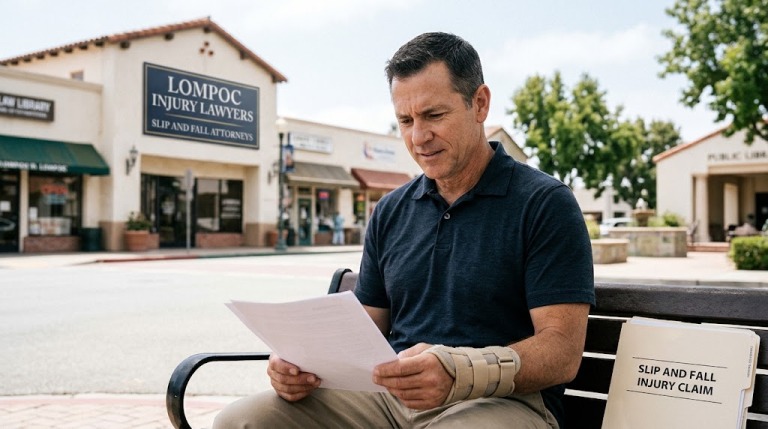
Slip and Fall Injury Lawyer Lompoc: What to Do After a Fall and How to Protect Your Claim
Nobody plans to fall. One second you’re walking down a store aisle, and the next you’re on the floor, staring at the ceiling and trying to work out whether anything is broken. If that happened in Lompoc, you’re probably sitting on a pile of questions. Who pays for the ER visit? Was it the store’s fault, or just bad luck? And is this the point where you call a slip and fall injury lawyer Lompoc residents recommend, or can you handle it yourself?
- A fall isn’t automatically anyone’s fault. You generally need to show a dangerous condition, that the owner knew about it (or should have), and that it caused your injury.
- Evidence disappears fast. Photos, witness names, and a written request to keep security video should happen in the first few days.
- Most private-property claims in California must be filed within two years. Claims against a city or other public entity can have a window as short as six months.
- California follows pure comparative fault, so even if you were partly to blame, you can still recover something. It just gets reduced.
- A slip and fall injury lawyer Lompoc injury victims hire is usually paid on contingency, meaning no fee unless money is recovered. Confirm the details in writing.
What Counts as a Slip and Fall Case, Really?
Lawyers file these under “premises liability,” which sounds heavier than it is. The idea is simple. People who own, rent, manage, or control a property have to take reasonable care to keep it safe for the people they invite or allow onto it. California builds that expectation into its general negligence rule, Civil Code section 1714, which says people are responsible for harm caused by their lack of ordinary care. So when a spill sits on a tile floor for forty minutes and nobody puts out a cone, the store hasn’t simply had bad luck. It may have failed in its duty.
“Slip and fall” is really shorthand for a family of accidents. You slip when you lose traction on something wet, greasy, or freshly polished. You trip when your foot catches on a raised sidewalk slab, a loose cord, a bunched-up mat, or a missing stair tread. You can also fall because of poor lighting, a broken handrail, a ramp with no grip, or stairs built or maintained in a way that sets people up to miss a step. All of these can support a claim, and a good Lompoc slip and fall lawyer will treat them the same way: as a question of what the property owner did, or didn’t do, about a hazard they could have dealt with.
Here’s the part people don’t expect, though. Getting hurt on someone’s property doesn’t make them automatically liable. Insurance companies know that, and they lean on it. The legal question is never just “did you fall?” It’s whether a dangerous condition existed, whether the owner knew or reasonably should have known about it, and whether they had a fair chance to fix it or warn you. If you’d like the general, not-city-specific version of this topic, the slip and fall lawyer guide walks through the basics, and the broader premises liability guide covers the other kinds of unsafe-property claims.
Where Falls Actually Happen Around Lompoc
Lompoc isn’t a big-city grid of high-rises. It’s a valley town with older neighborhoods, newer subdivisions, strip centers along H Street and Ocean Avenue, farmland and flower fields on the edges, and a steady population tied to Vandenberg Space Force Base. That mix shapes where people get hurt. And anyone who’s lived on this stretch of the coast knows the marine layer: mornings that stay damp, walkways that never quite dry, and outdoor stairs that turn slick long before midday.
| Setting | Hazards that show up again and again | Who may be responsible |
|---|---|---|
| Grocery, discount, and big-box stores | Wet floors near produce, spills with no warning sign, freshly mopped aisles, boxes left in walkways, curling entrance mats | Store operator; sometimes a cleaning or stocking contractor |
| Restaurants, cafés, and tasting rooms | Greasy floors near kitchens, spilled drinks, dim dining areas, uneven patio pavers | Business operator; the building’s owner in some cases |
| Apartments and rental homes | Cracked stair treads, loose railings, burned-out stairwell lights, leaks, broken walkways | Landlord and property management company |
| Parking lots and shopping centers | Potholes, broken curbs, faded striping, poor lighting, wheel stops that blend into the pavement | Property owner, management company, maintenance contractor |
| Sidewalks, parks, and public buildings | Slabs lifted by tree roots, damaged ramps, missing handrails, crumbling steps | City, county, or another public entity; sometimes the adjacent owner |
| Damp, foggy mornings | Slick ramps, algae on shaded walkways, wet outdoor stairs | Whoever controls the property and knows it stays damp |
| Agricultural and industrial sites | Mud, loose gravel, loading docks, uneven yards | Owner or operator; workers may be limited to workers’ compensation |
| Federal property | Same hazards as any building, but different claim rules | The federal government, through a special claims process |
Notice the pattern. Almost none of these hazards are mysterious. A leaking cooler, a dark stairwell, a sidewalk that has been lifting for three years: someone usually knew, or walked past it often enough that they should have. That is exactly what a slip and fall injury lawyer Lompoc families turn to will try to prove.
The First 72 Hours: What to Do (and Not Do)
What you do right after a fall can make a case stronger or quietly sink it. You don’t need to be perfect, and you obviously can’t be if you’re hurt. But a few habits matter more than almost anything else that happens later.
- Get medical care the same dayAdrenaline is a terrific liar. People walk out of stores saying they’re fine, then wake up unable to lift an arm. Head injuries, hairline fractures, and back injuries can take hours to show themselves. Go to the nearest ER or urgent care, such as Lompoc Valley Medical Center, and tell the provider exactly how the fall happened. Those records become the backbone of any claim, and gaps in treatment give insurers an easy argument that you weren’t really hurt.
- Report it before you leave the propertyTell the store manager, the landlord, or the building’s staff, and ask for a copy of the incident report. If it’s a rental, send a written message too, so there’s a date on it. Stick to facts. Don’t guess about why it happened, and don’t sign anything you haven’t read.
- Photograph the scene, wide and closeTake pictures of the hazard from several angles, plus a wider shot showing where it sits. Capture lighting, warning signs (or the lack of them), and anything nearby that explains the condition, like a leaking cooler. Put a coin or a pen next to a crack or lip for scale. Photograph your injuries now and again over the next several days as bruising develops.
- Get names and numbers for witnessesBystanders leave. Employees get transferred. A short note with a name and phone number is worth more than a vague memory of “some woman who saw it.”
- Ask in writing that video be preservedPlenty of security systems record over themselves in a matter of days or weeks. Send a short email or letter naming the date, time, and location, and asking that all footage and incident records be kept. A lawyer can send a formal preservation letter, which carries more weight, but don’t wait if you’re still shopping for one.
- Keep your shoes and clothing as they wereDon’t wash them, don’t toss them, and don’t have the shoes repaired. Defense lawyers love to blame footwear, and the shoes themselves can answer that.
- Write down what happened tonightWhere you were walking, what you were carrying, what the floor looked like, what anyone said to you. Memory fades surprisingly quickly. Then keep a simple daily note of pain levels, missed work, and things you can’t do anymore.
- Go easy with insurers and social mediaDon’t give a recorded statement to the property’s insurance company before you understand your position, and don’t post photos of yourself hiking, lifting, or smiling at a party. Even a perfectly innocent picture can get framed as proof you weren’t hurt.
A quick word on timing. If a lot of this feels impossible because you’re in pain, that’s normal. Do the medical care first. Everything else can be done by a family member on your behalf, or picked up by a lawyer once you’ve hired one.
How Fault Gets Proven in a Lompoc Fall Case
This is where most claims are won or lost, so it’s worth going slowly. A property owner generally isn’t an insurer of everyone’s safety. California courts expect owners to use reasonable care, which in practice means looking for hazards and fixing them within a sensible time. To succeed, an injured person has to establish a handful of connected points.
A dangerous condition existed
Wet floor, broken step, torn carpet, an unlit walkway. You need to show the condition was real and that it was the kind of thing that could hurt a reasonable person.
The owner knew, or should have known
The legal term is notice. Sometimes it’s straightforward: an employee made the mess, a tenant complained about the stair for months, or the same spot had caused earlier falls. More often, it’s constructive notice, meaning the hazard was there long enough that a careful owner would have found it. California’s well-known Ortega v. Kmart decision is a good illustration. It makes clear that the question often turns on how long the hazard existed and what the store did, or failed to do, to look for it.
They didn’t act in time
Reasonable care can mean cleaning it up, blocking it off, posting a warning, or repairing it. The question is whether the owner did enough, quickly enough.
That condition caused your fall
If you tripped over your own feet and the floor was fine, there’s no claim. The link between the hazard and the injury has to hold up, which is why photos and the immediate account of the fall matter.
You were actually hurt
Medical records, bills, and documented time away from work turn an incident into a claim with measurable damages.
How a lawyer builds the “they knew” argument
- Cleaning and inspection logs (or the absence of any)
- Employee testimony about staffing and how often aisles were checked
- Time-stamped video showing how long the hazard sat there
- Earlier incident reports and prior complaints from tenants or customers
- Work orders and maintenance requests that never got closed out
- Physical clues in photos, like cart tracks through a spill, footprints, or dried residue
The “open and obvious” defense comes up constantly, too. Owners argue that a reasonably careful person would have spotted the hazard and walked around it. In California that argument doesn’t automatically end a claim, but it can push some of the fault onto you, which brings us to the next point.
Pure comparative fault, in plain English. If a jury decides you were partly responsible, your recovery is reduced by your percentage. Say your damages are valued at $100,000 and you’re found 20 percent at fault. You’d recover $80,000. You aren’t shut out of a case just because you weren’t paying perfect attention. That’s a major difference from the stricter rules some other states use.
Who Can Be Held Responsible for Your Fall?
One of the quieter jobs of a slip and fall attorney in Lompoc is figuring out who should actually be named. The business whose name is on the door isn’t always the only answer, and sometimes it’s not the right one at all.
| Possible defendant | Why they may be responsible | What often matters |
|---|---|---|
| Business owner or operator | Controls the floors, aisles, and entrances customers use | Inspection routines, staffing, warning signs, video |
| Landlord or property owner | Responsible for common areas, stairs, lighting, and repairs | Repair requests, code issues, age of the defect |
| Property management company | Handles day-to-day maintenance for the owner | Work order history, contracts, who had control |
| Maintenance or cleaning contractor | May have created the hazard (a freshly mopped floor) or failed to fix it | The service contract and who was on site |
| Homeowners association | Often maintains shared walkways, stairs, and pools | Governing documents and maintenance records |
| City, county, or other public entity | Can be liable for dangerous conditions of public property | Strict claim deadlines; proof of notice |
| Federal government | Owns or operates certain facilities, including some on or near the base | A separate administrative claim process |
With a public entity, the rules change sharply. California’s Government Claims Act and Government Code section 835 allow claims for dangerous conditions of public property, but only if you meet notice and timing requirements that are much tighter than ordinary lawsuits. Typically that means a written claim to the entity, often within six months. Miss it, and your case may be over before it starts.
Sidewalks create their own confusion. California law generally pushes sidewalk upkeep onto the adjacent property owner, yet cities can still face liability in some circumstances. Who’s responsible can depend on the specific location, the nature of the defect, and local ordinances, so don’t assume. It’s one of the first things a lawyer will sort out.
Also keep in mind that fault can be shared. A restaurant, the building’s owner, and a contractor that repaired the floor might each carry part of the blame. Under California’s rules, how damages get divided can differ for medical costs and for pain and suffering, which is another good reason to have someone experienced reading the fine print.
Injuries That Commonly Follow a Fall
Falls feel mundane, and that’s why people underestimate them. The CDC reports that roughly one in four adults aged 65 and older falls every year, and falls are a leading reason for emergency room visits across all ages. Even a “simple” fall can change how you work, sleep, and get through a normal day.
Hip and pelvis fractures
Especially serious for older adults. Surgery, long recoveries, and a lasting loss of independence are common.
Wrist, arm, and shoulder injuries
People instinctively catch themselves with their hands, which is why fractured wrists and torn rotator cuffs show up so often.
Head injuries and concussions
Hitting the floor or a counter edge can cause concussions or worse. Symptoms like fog, headaches, and mood changes can surface later.
Back and neck injuries
Herniated discs, compression fractures, and nerve damage may need months of treatment and sometimes surgery.
Knee and ankle injuries
Torn ligaments and meniscus damage can sideline you from work that requires standing, lifting, or climbing.
Soft tissue and facial injuries
Deep bruising, sprains, and cuts can seem minor early on, then turn into chronic pain that lingers.
If you or someone close to you suffered a serious or permanent injury, the full picture matters more than the first ER bill. Future surgeries, therapy, lost earning ability, and daily limitations are all part of what a claim should account for. That’s also why a slip and fall injury lawyer Lompoc patients consult will usually want to wait until your doctors have a clearer sense of recovery before talking about a final number.
What a Slip and Fall Claim May Be Worth
Nobody can honestly promise a dollar amount over the phone, and anyone who does should make you nervous. What can be explained is how value gets built. California allows injured people to seek compensation, called damages, for both measurable and personal losses.
Economic damages
- Emergency care, hospital stays, surgery, imaging, medication, and therapy
- Future medical care you’re reasonably likely to need
- Lost income while you recover
- Lost earning capacity if you can’t return to the same work
- Out-of-pocket costs such as mobility aids, home modifications, and travel to appointments
Non-economic damages
- Physical pain and ongoing discomfort
- Emotional distress, anxiety, and sleep trouble
- Loss of enjoyment of activities that used to be routine
- Impact on marriage and family life, sometimes called loss of consortium
California doesn’t place a general cap on non-economic damages in ordinary premises cases, though juries and insurers still weigh them very differently from claim to claim. Punitive damages are possible in rare situations involving malice or conscious disregard for safety, but they’re the exception, not the plan.
What pushes a claim’s value up or down
- Severity and permanence of the injury. Surgery and lasting limitations raise value. A quick, complete recovery lowers it.
- Strength of the liability evidence. A clear record of notice beats a he-said-she-said dispute.
- Your share of fault. Any percentage assigned to you reduces the total.
- Consistency of medical treatment. Gaps and missed appointments are used against you.
- Available insurance. A policy limit can cap what’s realistically collectible.
- Your age, occupation, and health history. They influence future losses and how insurers argue about preexisting conditions.
One more detail that surprises people. California law generally limits recoverable past medical expenses to what was actually paid or incurred, not the inflated “billed” figure on a hospital statement. And if your health insurer, Medi-Cal, or Medicare covered treatment, they may have a right to be reimbursed from your settlement. A good lawyer negotiates those liens down where possible, because what you keep matters more than the headline number. The personal injury compensation guide goes deeper on how these pieces fit together.
Dealing With the Insurance Company
Within days of a fall, you’ll likely hear from an adjuster. They’ll sound warm, and they’ll probably say they just want to “get your side of the story” or “take care of your bills.” Remember whose employee they are. Their job is to settle claims for as little as possible, and a recorded statement is one of the best tools they have.
- They may ask leading questions about what you were looking at, what shoes you wore, or whether you’d had a bad knee before.
- They may offer a fast settlement before you know the full extent of your injuries. Once you sign a release, it’s final.
- They may request broad access to your medical history, then use unrelated conditions to argue your pain isn’t from the fall.
- They may suggest the hazard was “open and obvious” to shift blame onto you.
You aren’t required to be rude, but you also aren’t required to give them what they ask for. Share basic facts, decline a recorded statement until you’ve had advice, and run any settlement offer past someone who handles these claims regularly. A slip and fall injury lawyer Lompoc claimants hire early can take those calls off your plate entirely.
Deadlines You Can’t Afford to Miss
Time limits are the quiet trap in every fall case. Evidence fades, but deadlines are rigid. Miss one, and a perfectly good claim can be thrown out. The figures below are general and can change depending on the facts, so treat them as a heads-up, not a substitute for legal advice.
| Situation | General time limit | What to know |
|---|---|---|
| Claim against a private owner, business, or landlord | Two years from the date of the fall | This is the usual deadline to file a lawsuit under California’s personal injury statute |
| Claim against a city, county, school district, or other public entity | Written claim, generally within six months | A lawsuit usually can’t proceed until the claim is rejected or time passes; late-claim relief is limited |
| Fall on federal property | Administrative claim, generally within two years | Handled under the Federal Tort Claims Act; strict procedure |
| Wrongful death after a fatal fall | Generally two years from the date of death | Different family members may have standing |
| Injured child | Special rules may extend the time | Don’t count on it, especially with public entities |
The takeaway: if there’s any chance a government body, a public sidewalk, or a federal facility is involved, talk to a lawyer quickly. Six months disappears faster than most people expect.
Mistakes That Quietly Weaken Fall Claims
Most claims aren’t lost because of one dramatic error. They erode through small, understandable choices. These come up over and over.
- Brushing it off. Skipping medical care because “it’s probably nothing” leaves a hole in the record.
- Saying “I’m fine.” A casual reply to a store employee can get written into an incident report as your official statement.
- Giving a recorded statement too soon. You can’t un-say it later.
- Not photographing the hazard. Hazards get fixed fast, and the scene may look completely different by the next morning.
- Letting video get erased. Without a preservation request, footage is often lost routinely.
- Posting online. Defense teams do check social media.
- Stopping treatment early. Ending therapy because you’re tired of appointments hands insurers a free argument.
- Accepting the first offer. Early offers rarely reflect future surgery, long-term pain, or lost earning power.
- Waiting too long. Witnesses move, records get purged, and filing deadlines don’t flex.
Do You Actually Need a Lawyer?
Honestly, not every fall calls for a slip and fall injury lawyer Lompoc has to offer. If you slipped, bruised a hip, missed no work, and a store’s medical payments coverage handled a small bill, you may not need to hire anyone. But the picture changes quickly when any of the following are true:
- You had a fracture, a head injury, a spinal injury, or surgery
- The owner or insurer is denying responsibility or blaming you
- You’ve missed significant work or can’t go back to your old job
- A government body, several defendants, or a federal facility could be involved
- The injured person is a child or an older adult who may have lasting complications
- A loved one died after a fall
- The insurance company’s offer seems low, or it’s pressing you to settle quickly
What a slip and fall injury lawyer in Lompoc actually does
People imagine courtroom drama. The reality is far more practical, and most of it happens quietly before anyone sees a judge. A lawyer will typically:
- Send preservation letters for video, maintenance records, and incident reports
- Investigate the property, photograph it, and track down witnesses
- Identify every party that may share responsibility
- Obtain and organize your medical records and bills
- Consult medical providers or other experts about long-term impact when needed
- Handle all insurer communication so you aren’t the one fielding calls
- Calculate full damages, including future costs, and prepare a settlement demand
- Negotiate liens and, if talks stall, file suit and take the case forward
How legal fees usually work
Most personal injury lawyers handle fall cases on a contingency basis. You don’t pay attorney’s fees up front, and the lawyer is paid a percentage only if there’s a recovery. The percentage varies, often around a third and sometimes more if a lawsuit is filed, so get it in writing. Ask separately about case costs (filing fees, records, experts) and whether they come out before or after the fee is calculated. A transparent lawyer will explain this without hesitation.
Choosing the Right Lawyer for Your Case
Finding a slip and fall injury lawyer Lompoc residents can trust comes down to a few specifics. Not every attorney who advertises “personal injury” handles premises cases day in and day out, and that matters. Falls are won on small, specific details: how floor-cleaning logs work, what notice means, how to depose a store manager. Here’s what to look for.
- Real premises liability experience. Ask how many fall cases they’ve handled and how they usually resolve.
- Willingness to go to court. Insurers can tell which lawyers always settle. A credible trial record can strengthen negotiations.
- Familiarity with Santa Barbara County. Knowing local courts, adjusters, and how cases tend to play out in the area is a quiet advantage.
- Resources to build the case. Experts, investigators, and the ability to front costs matter in contested claims.
- Clear communication. You should know who handles your file and how often you’ll get updates.
- A good standing with the State Bar. You can check any California attorney’s license and discipline history on the State Bar’s website.
Questions worth asking at the first consultation
- Have you handled fall cases like mine, and what happened?
- Who will actually work on my case day to day?
- What’s your fee, and how are costs handled?
- What are the biggest weaknesses you see in my case?
- What deadlines apply, and what should I do before our next conversation?
That last one tells you a lot. A lawyer who names the weak points honestly is usually more trustworthy than one who promises the moon. If you’re still comparing options, Ask Local Law’s personal injury lawyer directory is a reasonable place to start, and the personal injury legal topics page explains the wider area of law these cases belong to.
How a Fall Case Typically Unfolds
Every case moves at its own pace, but most follow a similar rhythm. A slip and fall injury lawyer Lompoc clients retain will usually walk through these stages with you at the first meeting. Knowing the stages makes the waiting easier to bear.
- Consultation and case reviewA lawyer reviews what happened, your injuries, and the property involved. Many offer an initial consultation at no charge, so ask.
- Investigation and evidence preservationPreservation letters go out, the scene is documented, and witnesses are identified while memories are fresh.
- Treatment and documentationYou focus on getting better. Your lawyer gathers records and tracks costs, lost income, and how the injury affects daily life.
- Demand packageOnce your medical picture is clearer, the lawyer assembles a detailed demand to the responsible party’s insurer with evidence and a calculated value.
- NegotiationOffers and counteroffers go back and forth. Plenty of claims settle here, once the insurer sees a well-prepared case.
- Lawsuit and discoveryIf talks fail, a lawsuit is filed in the appropriate court. Both sides exchange documents, answer written questions, and take depositions.
- Mediation or trialMost filed cases still resolve before verdict, often at mediation. If not, a judge or jury decides.
Simple, well-documented claims can resolve in a matter of months. Contested ones, or those involving serious injuries, can take a year or two, sometimes longer. Rushing to settle before your recovery is clear is one of the costliest mistakes injured people make.
Special Situations Worth Knowing About
Falls at work
If you fell on the job, workers’ compensation generally covers medical care and part of lost wages regardless of fault, but it usually prevents you from suing your employer. A separate claim against an outside party, such as a property owner who wasn’t your employer, may still be possible. The work injury lawyer guide and the workers’ compensation claim guide explain how the two tracks differ.
Falls in nursing homes and care facilities
A fall in a care setting isn’t always “just an accident.” Understaffing, ignored fall-risk plans, and missing supervision can point to neglect. These cases follow different rules, and the nursing home abuse lawyer guide covers what families should look for.
Falls at a rental, vacation home, or friend’s house
Tenants and guests can have claims, too. A landlord’s duty to repair known hazards is a big part of rental cases. For a fall in a private home, the homeowner’s liability coverage is often what pays. It can feel awkward to bring a claim against someone you know, but the claim typically goes to their insurer, not out of their pocket.
Falls involving children
Kids move fast and can’t be expected to judge hazards the way adults do. California law considers a child’s age and capacity when deciding fault, and special time-limit rules can apply. Get advice early anyway.
Falls at Vandenberg or other federal property
Because Lompoc sits right beside Vandenberg Space Force Base, some falls happen on federal ground. These claims run through the Federal Tort Claims Act, which requires an administrative claim before a lawsuit can be filed and has its own strict rules. It’s not a do-it-yourself situation.
When a fall turns fatal
Losing someone after a fall is devastating. Certain family members may be able to bring a wrongful death claim for funeral costs, lost financial support, and the loss of companionship. The wrongful death lawyer guide explains who can file and what to expect.
Frequently Asked Questions About Slip and Fall Cases in Lompoc
How much does a slip and fall injury lawyer in Lompoc cost?
Most handle fall cases on contingency, which means no attorney’s fee unless you recover money. The percentage varies, so ask for the fee agreement in writing and find out how case costs are handled.
How long do I have to file a slip and fall claim in California?
For a private owner or business, the general deadline is two years from the date of the fall. Claims against a public entity can require a written claim within about six months, and federal property has its own process. Because the exact rule depends on who’s responsible, check early.
What if I was partly at fault for the fall?
California uses pure comparative fault. Your recovery is reduced by your share of responsibility, but you can still recover something even if you were mostly at fault.
Do I have a case if there was no warning sign?
A missing warning can help, but it isn’t enough alone. The key questions are whether the hazard existed long enough that the owner should have caught it, and whether they took reasonable steps to prevent falls.
Can I sue if I fell on a public sidewalk?
Possibly. A city or other public entity may be liable for a dangerous condition it knew about or should have fixed, but the claim rules are stricter and the deadlines shorter. In some situations the adjacent property owner may share responsibility.
Should I talk to the store’s insurance company?
You can share basic facts, but it’s wise to avoid a recorded statement or a quick settlement until you understand your injuries and your options. The adjuster works for the insurer, not for you.
What if I didn’t go to the doctor right away?
Get checked as soon as you can. A delay doesn’t automatically end a claim, but insurers use gaps to argue the injury wasn’t serious or wasn’t caused by the fall. Be honest with your provider about how it happened.
What evidence matters most?
Photos of the hazard, witness contact details, the incident report, medical records, and any video are usually the strongest pieces. Maintenance and inspection records are often critical too, and a lawyer can request them.
How long will my case take?
It depends on the injury, the evidence, and whether the insurer cooperates. Straightforward claims may settle in several months, while disputed or serious cases can take a year or more.
Is a slip and fall settlement taxable?
Compensation for physical injuries is generally not treated as taxable income, but certain parts, like interest or punitive damages, may be. A tax professional can confirm how it applies to your situation.
Bottom Line: Don’t Let a Fall Define Your Next Year
A fall can upend your work, your health, and your finances in a few seconds. Whether or not you end up needing a slip and fall injury lawyer Lompoc locals can rely on, the steps are the same: see a doctor, document everything, protect the evidence, watch the deadlines, and be careful about what you tell insurers. If your injury is serious or the other side is pointing fingers, getting experienced help early is often the difference between a claim that works and one that falls apart.
Ready to take the next step? You can ask a legal question on Ask Local Law to get oriented, or browse the personal injury lawyers directory to compare attorneys who handle fall cases.
This article is general information, not legal advice, and reading it doesn’t create an attorney-client relationship. Laws, deadlines, and procedures change and depend on the facts of each case. Talk to a licensed California attorney about your specific situation.