Legal insight
Finding a Personal Injury Lawyer in Port Orchard, WA, and Knowing What to Ask Once You Do
Port Orchard Injury Claims Guide Injury law · Port Orchard, Kitsap County Finding a Personal Injury Lawyer in Port Orchard, WA, and Knowing What to Ask Once You Do Contents The short version After the crash or fall How injuries…
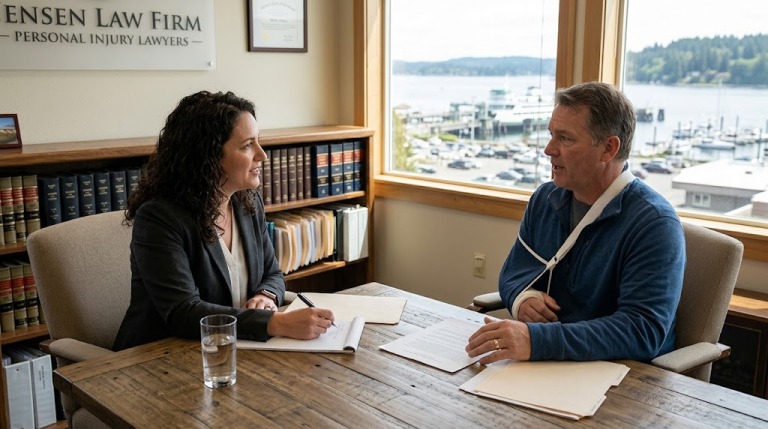
Injury law · Port Orchard, Kitsap County
Finding a Personal Injury Lawyer in Port Orchard, WA, and Knowing What to Ask Once You Do
Contents
Most people don’t go looking for a personal injury lawyer in Port Orchard, WA on a good day. You’re searching from a couch with a sore neck, or from a hospital waiting room, or at the kitchen table with a stack of bills and a voicemail from an adjuster who sounds a little too friendly.
This guide is written for that moment. It walks through what to do in the first few days, how injury claims actually work under Washington law, what kinds of cases a Port Orchard personal injury attorney typically handles, and how to pick someone you can trust with a claim that may shape your finances for years. We’ve kept the legal jargon to what you genuinely need and explained it in plain terms.
The short version
- Washington gives most injury victims three years to file a lawsuit, but evidence and witnesses fade much faster than that.
- Fault can be shared. You can still recover money if you were partly to blame, though your share reduces the payout.
- Claims against a city, county or the state follow a separate written-claim process with a mandatory 60-day wait.
- Insurers are not on your side, even the friendly ones. Talk to a lawyer before you give a recorded statement.
- Most injury lawyers work on contingency, so a first conversation usually costs nothing.
One note before we start. This page is general legal information, not advice about your own situation. Every claim turns on its own facts, and a short conversation with a licensed attorney will tell you more than any article can. If you want to see local attorney profiles while you read, our directory of personal injury lawyers is a good place to start.
The first few days after an accident
What you do right after an injury has an outsized effect on the claim that follows. Nobody expects you to behave like a litigator while you’re hurting. But a handful of habits, started early, protect both your health and your case.
- Get checked out, even if you feel okay.Adrenaline hides pain. Whiplash, concussions and internal bruising often show up a day or two later. A medical record created right away also ties your symptoms to the event, which matters when an insurer later suggests the injury came from somewhere else.
- Call the police or sheriff for any crash with injuries.In Port Orchard that may mean the city police department, the Kitsap County Sheriff’s Office or the Washington State Patrol if you were on State Route 16. A report gives you an official record of who was where and what each driver said.
- Photograph everything you can.Vehicles, skid marks, the spilled liquid, the broken stair, the signage, the weather, your visible injuries. Take wide shots and close ones. If the place is about to be cleaned or repaired, move fast.
- Collect names and numbers.Other drivers, passengers, anyone who saw it happen. Witnesses are easy to find on day one and surprisingly hard to track down in month six.
- Keep your own words to a minimum.Be polite, exchange insurance details, and describe facts if asked. Don’t guess about speed, don’t say “I’m fine,” and don’t apologize. An apology is natural and human. It can also be quoted back to you.
- Start a simple log.A notes app is enough. Record pain levels, missed work, appointments, mileage to the clinic, and the everyday things you can’t do anymore. Small details add up and are easy to forget.
- Speak with a lawyer early.Not because you’re planning to sue, but because you want to know your options before an adjuster narrows them for you.
If you’re searching for a personal injury lawyer in Port Orchard, WA in the middle of all this, you don’t need to have every document in hand first. A good attorney’s office will help you sort out what’s missing.
How injuries tend to happen around Port Orchard
Port Orchard sits on Sinclair Inlet, across the water from Bremerton, and the geography shapes the kinds of accidents that end up in a lawyer’s office. Understanding the local picture helps you see why a local approach to a claim can matter.
Commuter traffic and State Route 16
Many residents drive toward the Puget Sound Naval Shipyard, Gig Harbor or Tacoma every day, which keeps State Route 16 and the arterials leading to it busy at predictable hours. Rear-end collisions in slow, stop-and-go traffic are common. So are merging crashes near interchanges and left-turn collisions along busy corridors like Bethel Road and Tremont Street.
Hills, rain and short winter days
Wet pavement for much of the year, steep grades near the waterfront and early darkness in winter all contribute to crashes and to pedestrian injuries. A driver who says “I never saw them” at 5:15 p.m. in December is a story injury lawyers hear often.
The waterfront, the marina and the ferry
Port Orchard has a working marina, boat traffic on the inlet and a passenger ferry link to Bremerton. Injuries on or near the water can bring in maritime rules that differ from ordinary state law, especially if you work on a vessel or were hurt aboard one. Deadlines, remedies and even which court hears the case can change. This is a good moment to speak with someone who has handled a boating or vessel claim before, rather than assuming the usual process applies.
Navy, shipyard and federal work
A large share of the local workforce is connected to the military or federal employment. That affects how some injuries are handled. A civilian federal employee hurt on the job generally goes through a federal compensation system rather than the state one, and service members face special limits on suing the government for injuries connected to service. If your accident involved base property, a government vehicle or your own job, say so right away when you talk to an attorney. It changes the roadmap.
Where the case would be heard
Kitsap County Superior Court sits in Port Orchard, and many local injury lawsuits start there. Familiarity with local judges, court procedures and the insurance adjusters who regularly handle claims in the area is a real, if unglamorous, advantage of working with a local Port Orchard personal injury attorney.
Types of injury cases a Port Orchard personal injury lawyer handles
Personal injury is an umbrella term. It covers any situation where someone’s carelessness, or sometimes deliberate conduct, causes you physical or emotional harm. Here are the categories that come up most often for people in South Kitsap, with links to deeper guides where we have them.
Car accidents
By far the most common claim. Disputes usually involve who was at fault, how serious the injuries are and how much insurance is available. Our car accident lawyer guide covers the process in more detail.
Truck and commercial vehicle crashes
These can involve the driver, the trucking company, a shipper or a maintenance contractor. The injuries tend to be heavier and the evidence more complex. See our truck accident guide.
Motorcycle crashes
Riders are exposed, and insurers sometimes lean on bias against them. A motorcycle accident lawyer can push back on that.
Pedestrian and bicycle injuries
Crosswalk collisions and dooring incidents often turn on right-of-way rules. Read more on pedestrian accidents and bicycle accidents.
Rideshare crashes
Coverage depends on whether the app was on and whether a passenger was aboard. Our rideshare accident guide sorts out the layers.
Slip, trip and fall injuries
Store floors, rental stairs, parking lots. The question is whether the property owner knew, or should have known, about the hazard. Start with the slip and fall guide and the broader premises liability overview.
Dog bites
Washington has a specific statute that holds many dog owners responsible for bites, which can simplify the claim. Details are in our dog bite guide.
Medical negligence
These cases demand expert testimony and have their own deadline rules. See medical malpractice.
Nursing home neglect
Bedsores, unexplained injuries and sudden decline can point to neglect. Learn more about nursing home abuse claims.
Wrongful death
When negligence takes a life, certain family members can bring a claim. Our wrongful death guide explains who qualifies and what can be recovered.
Boating and vessel injuries
Collisions on the inlet, falls from docks and injuries aboard working vessels may involve maritime law. Raise this early with any attorney you consult.
Product-related injuries
A defective tool, a faulty child seat or a dangerous vehicle part can create a claim against the manufacturer or seller.
Hurt at work? That is usually a workers’ compensation matter first, though a third party, such as a negligent driver or equipment maker, may also be responsible. Our guides on work injuries and the workers’ compensation claim process explain how the two tracks fit together.
Washington’s ground rules, in plain English
Any personal injury lawyer in Port Orchard, WA will be working inside the same state framework. You don’t need to memorize it, but knowing the basics helps you follow what your attorney tells you and spot a pitch that sounds off.
You have to show someone was careless
Washington is an at-fault state. To win, you generally need to show that another person owed you a duty of care, failed to meet it, and that failure caused your injuries and losses. In a car crash that might be a driver who ran a light. On a property it might be an owner who ignored a broken railing for weeks.
Shared fault doesn’t end your claim
Washington follows pure comparative fault. If a jury decides you were 20 percent responsible, your award is reduced by 20 percent. Even someone mostly at fault can recover the remaining share. Insurers know this and often work hard to push your percentage up, so fault allocation is one of the most contested parts of many claims.
Deadlines are strict
Missing a filing deadline can end a valid claim permanently. The table below shows the headline rules. These are general summaries and exceptions exist, so confirm your own dates with an attorney.
| Type of claim | General rule | What to know |
|---|---|---|
| Injury from negligence (crashes, falls, most injuries) | 3 years | Generally runs from the date of the injury under RCW 4.16.080. |
| Wrongful death | 3 years | Typically counted from the date of death. |
| Medical negligence | 3 years from the act, or 1 year from discovery | The later date generally controls. Special rules apply (RCW 4.16.350). |
| Intentional harm | 2 years | Shorter than negligence claims (RCW 4.16.100). |
| City, county or state defendant | Written claim first, then a 60-day wait before suing | The claim must be filed on the proper form with the proper office. The wait pauses the clock but does not replace it. |
| Injured minors | Often extended | Deadlines may be paused until age 18. Don’t count on it without checking. |
Quick check: your three-year date
This only applies the general three-year negligence rule. It cannot account for government defendants, medical negligence, maritime claims or any exception. Treat it as a rough marker and confirm with a lawyer.No cap on pain and suffering in most cases
Unlike some states, Washington does not set a general statutory ceiling on non-economic damages in ordinary injury cases. That doesn’t mean big numbers are automatic. It means a jury can decide what the harm is actually worth.
Insurance requirements shape your options
Drivers must carry minimum liability coverage, currently 25,000 dollars per person, 50,000 dollars per accident and 10,000 dollars for property damage. That sounds like plenty until you see the cost of a surgery and months off work. This is why underinsured motorist coverage on your own policy matters, and why insurers must offer it. Insurers must also offer personal injury protection, which pays certain medical costs regardless of fault if you carry it. Look at your own declarations page soon after a crash. A lawyer will ask for it.
Hit-and-run? Leaving the scene of an injury crash is a felony in Washington. Report it right away. If the driver is never found, your own uninsured motorist coverage may be the path to compensation.
What a personal injury claim can actually recover
The word “damages” sounds clinical, but it simply means the money a claim can seek to put you back as close as possible to where you were before. A Port Orchard injury lawyer will usually think about it in two buckets.
Economic losses
These have receipts and pay stubs attached. They include emergency care, surgery, physical therapy, prescriptions, medical equipment, future treatment you are likely to need, lost wages, reduced earning capacity if you can’t return to the same job, and property damage such as a wrecked vehicle.
Non-economic losses
These are harder to price and often make up much of a serious claim. Pain, ongoing discomfort, anxiety after a crash, sleep disruption, scarring, loss of enjoyment of activities you used to love, and the strain on relationships. A spouse may also have a claim for loss of consortium. Washington juries are allowed to weigh these harms, and good documentation, such as your daily log, doctors’ notes and statements from family, helps them understand it.
Punitive damages are rare
Washington generally does not allow punitive damages unless a statute specifically authorizes them. Don’t build expectations around a headline-style verdict. Most claims are about fair compensation for real losses.
If you want a closer look at how value is built and what drives it up or down, our guide to personal injury compensation breaks it down step by step.
Dealing with insurance companies
Here is the uncomfortable truth about claims. Insurance adjusters are trained, courteous and paid to resolve claims for as little as is reasonable. They are not villains, but their job isn’t to maximize your recovery.
The recorded statement
The other side’s insurer will often ask you for a recorded statement soon after the accident. You aren’t generally required to give one to the at-fault party’s insurer. A casual remark such as “it was just a little fender-bender” or “I’m feeling better already” can be used to question your injuries later. Let your lawyer handle it, or at least prepare carefully first.
The quick settlement offer
An early offer can look tempting when bills are stacking up. Once you sign a release, though, the claim is over, even if your injuries turn out to be worse than expected. Back pain that seems manageable in week two can become a months-long problem. Settling before you know your medical outlook is among the most common regrets injured people describe.
Gaps in treatment
If you stop going to appointments for a few weeks, insurers may argue you weren’t really hurt. If cost is the reason, tell your lawyer. There may be ways to continue care while the claim is pending.
Your own insurer
Even claims with your own company, such as underinsured motorist or medical payments coverage, can turn adversarial. Don’t assume the people who’ve collected your premiums for years will automatically see things your way.
When the other side’s offer is too low, a well-organized demand package helps. Our overview of demand letters explains what one contains and why it changes the conversation.
How a claim unfolds from start to finish
People often ask how long all this takes. The honest answer is that it depends on the injury, the evidence and whether the insurer negotiates in good faith. Still, most claims follow a recognizable path.
Treatment and investigation
The first phase is about getting better and building a record. Your attorney gathers police reports, photographs, medical records, billing statements, employment records and witness statements. In serious cases they may hire experts, such as an accident reconstructionist or a doctor who can speak to future care. A responsible lawyer usually waits until you’ve reached maximum medical improvement, meaning your condition has stabilized, before putting a final number on the claim.
The demand
Once the picture is clear, your lawyer sends a written demand to the insurer that lays out liability, injuries, costs and a requested amount. This starts the negotiation.
Negotiation and mediation
Expect offers and counteroffers. Many claims resolve here. If talks stall, the parties may try mediation, where a neutral third person helps them find a number both can live with.
Filing a lawsuit
If settlement isn’t realistic, your lawyer files a complaint, often in Kitsap County Superior Court for a local case. Filing a lawsuit doesn’t mean you’ll go to trial. It opens a formal process called discovery, where both sides exchange documents, answer written questions and give depositions. Plenty of cases settle after that.
Trial, if it comes to that
A small share of cases reach a jury. The decision to go to trial is yours, made with your lawyer’s candid assessment of the risks and potential rewards.
A timing reality. Straightforward claims with clear fault and modest injuries may resolve in a few months. Serious injury cases, disputed liability and lawsuits can take a year or more. Anyone promising a fast big payout is selling something.
How to choose a personal injury lawyer in Port Orchard, WA
Searching online will turn up a long list of firms. Advertising polish says little about who will actually handle your file. Here’s what to look at instead.
Do they focus on injury work?
Law is specialized. A lawyer who spends most of their career on injury claims will know how insurers value cases, which experts are credible and how local juries respond. Ask what share of their practice is injury-related and whether they’ve handled a case like yours.
Who will actually work on your case?
It’s perfectly normal for paralegals and case managers to do much of the day-to-day work. What matters is that a licensed attorney is accountable for your claim and that you know how to reach them. Ask who your point of contact will be and how quickly calls are usually returned.
Are they willing to go to court?
Insurers keep track of which lawyers settle everything and which ones try cases. A lawyer with real trial experience tends to negotiate from a stronger position. Ask directly how often they’ve taken cases to verdict.
Do they explain things clearly?
A good first consultation should leave you better informed, not pressured. If you feel rushed, talked over or promised a guaranteed result, keep looking. No ethical attorney can guarantee an outcome.
Can you verify their standing?
The Washington State Bar Association lists licensed attorneys and discipline history. A quick check takes minutes. You can also read reviews, but weigh them with some skepticism. A handful of vivid comments don’t tell you how the firm treats an average client.
Questions worth bringing to the first meeting
- Have you handled claims like mine in Kitsap County, and what happened?
- What do you see as the biggest weakness in my case?
- What will you charge, and which costs come out of my settlement?
- How will you keep me informed, and how often?
- Do you expect this to settle, or should I plan for a lawsuit?
If you’re not sure where to begin, the personal injury overview on our site covers the basics, and you can ask a question if something here doesn’t match your situation.
What hiring an injury lawyer costs
Cost is the worry that stops many people from making that first call. The good news is that most Port Orchard personal injury lawyers work on a contingency fee. They take a percentage of the money recovered, and if there’s no recovery, there’s generally no attorney fee. Initial consultations are commonly free.
Contingency doesn’t mean “no cost” in every respect, so ask about these points before you sign:
- The percentage. It may change depending on whether the case settles or a lawsuit is filed.
- Case expenses. Filing fees, medical record charges, expert fees and deposition costs are separate from the fee. Find out whether you owe them if the case is lost.
- How the math works. Ask whether the percentage is taken before or after expenses. It changes your net.
- Liens. Health insurers, Medicare, Medicaid or medical providers may have a right to be repaid from your settlement. Good lawyers negotiate these down where possible.
Washington’s professional rules call for contingency fee agreements to be in writing. Read it carefully, and don’t hesitate to ask for a plain explanation of anything unclear. A one-page example calculation of what you’d actually take home is a reasonable request.
Mistakes that quietly weaken injury claims
After a stressful accident, small missteps are easy. These ones come up again and again.
- Waiting too long. Evidence disappears. Surveillance footage is often overwritten within days or weeks, and witnesses move on with their lives.
- Posting about it online. A photo of you at a barbecue or on a hike can be taken out of context. Assume insurers will look at your public profiles, and consider pausing posts until the claim is resolved.
- Downplaying symptoms. Tell your doctor everything, including the small stuff. Records that skip a symptom make it harder to link later.
- Ignoring government deadlines. If a city, county or state vehicle or property is involved, the written claim process has its own mechanics. Getting it wrong can sink an otherwise good claim.
- Accepting the first offer. It’s rarely the best the insurer will do, and you can’t reopen it later.
- Assuming partial fault means no claim. Because Washington allows recovery even when you share blame, you shouldn’t write off your claim just because you think you might have contributed.
- Going silent on your own policy. Notify your insurer promptly. Delay can complicate coverage you may need.
Questions people ask about injury claims in Port Orchard
How do I find a good personal injury lawyer in Port Orchard, WA?
Start by confirming the attorney is licensed with the Washington State Bar Association and spends most of their practice on injury claims. Then schedule one or two free consultations and compare how clearly each lawyer explains the process, the risks and the fee. Our directory of injury lawyers is one way to begin.
How much does a personal injury lawyer cost?
Most work on contingency, taking an agreed percentage only if you recover money. Case expenses are usually separate, so ask how they’re handled and request the agreement in writing before you sign.
How long do I have to file an injury lawsuit in Washington?
For most negligence-based injuries, the general deadline is three years from the date of the injury. Wrongful death is generally three years from the death, medical negligence follows its own rules and claims against government bodies require a formal claim first. Because exceptions exist, confirm your date with a lawyer rather than relying on a rule of thumb.
Can I still recover if I was partly at fault?
Often yes. Washington reduces your recovery by your percentage of fault but does not bar you from recovering. Insurers still frequently try to increase that percentage, so how fault is assigned deserves attention.
What if the driver who hit me had no insurance?
Your own uninsured or underinsured motorist coverage may apply if you carry it. Check your declarations page and tell your lawyer right away, because these claims have their own notice requirements and can be contested by your own insurer.
Do I need a lawyer for a minor accident?
Not always. If you had no injuries and only minor property damage, you may be fine dealing with the insurer yourself. If you were hurt, missed work, or fault is disputed, a free consultation is worth the time, even for something that looks small at first.
What should I do if I was injured on a boat or at the marina?
Report the incident, seek medical care and photograph the scene and equipment. Then speak to a lawyer who has handled vessel-related claims. Maritime law can change the deadlines, the available remedies and the court, so the general state rules may not apply.
Will my case go to trial?
Most injury claims settle before trial. Your lawyer may still file a lawsuit to move negotiations along, and you decide whether to accept a settlement or proceed after hearing their assessment.
What if a family member died because of someone else’s negligence?
Certain close family members, and sometimes the estate, can bring a wrongful death claim. These cases involve specific rules about who may sue and what can be recovered. Our wrongful death guide is a good first read, and a lawyer can guide you through it with care.
Does a dog bite always lead to a claim?
Washington has a statute that makes many dog owners responsible for bites that happen in public places or while someone is lawfully on private property. Facts still matter, such as where it happened and whether the person was provoking the animal. See our dog bite guide.
Your next step
If you’ve been hurt, the most useful thing you can do today is get your options in front of a licensed attorney while your memory and the evidence are still fresh. Gather what you have: photos, the police report number, medical paperwork, your insurance details and your notes. Then book a free consultation with a personal injury lawyer in Port Orchard, WA who handles cases like yours.
You can browse local profiles in our personal injury lawyer directory, read the full personal injury overview, or submit a question and get pointed in the right direction.
This article provides general legal information for educational purposes and does not create an attorney-client relationship. Laws, deadlines and insurance requirements change, and every case depends on its facts. Consult a licensed Washington attorney about your specific situation.