Legal insight
Brain Injury Lawyer Norwalk: What Injured Families Need to Know Before Talking to an Insurer
Brain Injury Lawyer Norwalk, CT | Rights, Deadlines & Compensation Guide Brain Injury Lawyer Norwalk: What Injured Families Need to Know Before Talking to an Insurer Most people who contact a brain injury lawyer in Norwalk are not thinking about…
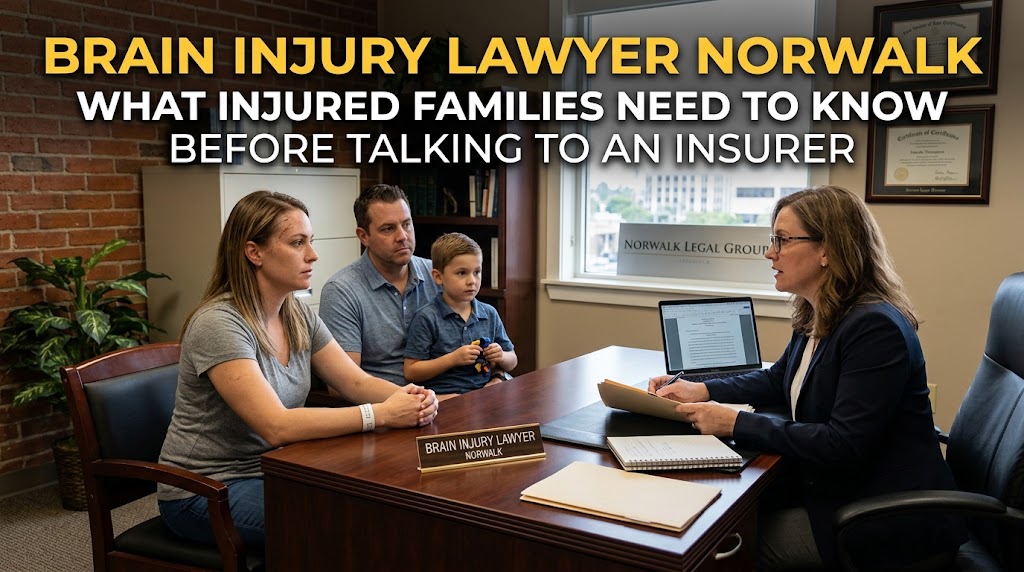
Brain Injury Lawyer Norwalk: What Injured Families Need to Know Before Talking to an Insurer
Most people who contact a brain injury lawyer in Norwalk are not thinking about lawsuits at all. They are thinking about a spouse who can’t remember the morning, a teenager who now snaps at everyone, or a parent who came home from the hospital “fine” and has not been the same since. The legal question usually arrives a few weeks later, when the bills do.
This guide is written for that moment. It explains how a traumatic brain injury (TBI) claim actually works in Connecticut, why these cases are harder than a typical injury claim, what compensation can cover, and how to judge whether a Norwalk brain injury attorney is the right fit for your situation. It is general information, not legal advice for your specific facts.
- Connecticut generally gives you two years from the injury to file a negligence lawsuit, and some claims have far shorter notice windows.
- Brain injuries are often invisible on day one. Early medical records and a symptom diary carry real weight later.
- A recorded statement to the other side’s insurer can hurt a claim before you understand your own diagnosis.
- Reputable injury firms work on contingency, so a first consultation should not cost you anything.
Why Brain Injury Claims Are Not Like Other Injury Claims
A broken wrist heals on an X-ray. A brain injury often doesn’t show up at all. Standard CT scans frequently come back clean in mild and even some moderate cases, which means an adjuster can look at a “normal” scan and conclude nothing is wrong. Meanwhile the person living with the injury is dealing with fog, headaches, sleep that never refreshes, and a short fuse they never had before.
That gap between what the person experiences and what the paperwork shows is the central problem in nearly every case. A good Norwalk brain injury lawyer spends much of the case closing it: lining up neurologists, neuropsychologists, rehabilitation specialists, employers, and family members who can describe the before and after in concrete terms.
The second difference is time. A fractured leg has a recovery date. A TBI may not reach what doctors call maximum medical improvement for a year or more, and some effects never fully resolve. Settling too early is one of the costliest mistakes families make, because a release signed today cannot be reopened when next year’s reality turns out to be worse.
Types and Severity of Traumatic Brain Injury
Doctors usually sort TBIs by how the injury happened and how severe it is. The labels matter legally because they shape how much future care a claim should account for.
| Severity | Typical presentation | What it can mean for a claim |
|---|---|---|
| Mild (concussion) | Brief or no loss of consciousness, confusion, headache, dizziness, light and noise sensitivity | Often dismissed by insurers. Persistent symptoms, sometimes called post-concussion syndrome, can last months and affect work. |
| Moderate | Longer unconsciousness or confusion, visible changes on imaging, hospital stay | Rehabilitation, therapy, and lasting cognitive or emotional changes are common. |
| Severe | Extended coma or unresponsiveness, major structural damage | Lifetime care planning, home modification, and possible loss of independence. |
Clinicians often use the Glasgow Coma Scale to grade severity right after the injury, but a “mild” score on paper does not mean a mild life impact. Plenty of people with a classification of mild injury cannot return to their old job.
Closed, open, and diffuse injuries
A closed injury happens when the head is struck or violently shaken without the skull being breached, as in a crash or a fall onto concrete. An open or penetrating injury involves an object entering the skull. Diffuse axonal injury comes from rapid acceleration and deceleration, the kind of force a high-speed collision produces, and it can damage nerve fibers across wide areas of the brain without any single dramatic wound.
How These Injuries Happen in and Around Norwalk
Norwalk is a busy place to be on the road and on foot. Interstate 95 and the Merritt Parkway carry heavy commuter and truck traffic through the city, Route 7 and the Post Road are full of turning vehicles and stop-and-go congestion, and the SoNo and downtown corridors mix nightlife, pedestrians, and cyclists. Add older sidewalks, construction sites, boat yards, and a large stock of rental and multi-family housing, and the sources of head trauma are easy to list:
- Motor vehicle collisions. Rear-end impacts, highway lane-change crashes, and intersection wrecks regularly cause head injuries even when the driver never strikes the windshield. See our guide to a car accident lawyer for how the broader claim works, or the page on truck accident claims when a commercial vehicle is involved.
- Pedestrian, bicycle, and motorcycle crashes. People without a protective shell take the force directly. Our resources on pedestrian accidents, bicycle accidents, and motorcycle accidents cover the added fault arguments these cases attract.
- Falls. Wet floors, broken stairs, unlit parking lots, and icy entrances are among the most common causes of head injury, especially for older adults. A slip and fall lawyer looks at what the property owner knew and when.
- Workplace accidents. Falls from ladders, struck-by incidents, and scaffolding failures. These often run through the workers’ compensation system, covered in our work injury guide.
- Medical errors. Delayed diagnosis of a bleed, anesthesia mistakes, or oxygen deprivation during a procedure. These fall under medical malpractice, and when the patient is a newborn, under birth injury law.
- Assaults and negligent security. Bars, apartment complexes, and event venues can be responsible when poor security lets an attack happen.
- Nursing facility neglect. Unattended residents fall. Families can look at nursing home abuse standards when care falls short.
Symptoms That Deserve Attention (Even Weeks Later)
The symptoms people most often miss are not dramatic. They are small shifts that family members notice before the injured person does.
Physical
Persistent headache, nausea, balance trouble, ringing ears, blurred vision, extreme fatigue, new sensitivity to light or noise.
Cognitive
Slowed thinking, trouble finding words, short-term memory gaps, difficulty following conversations or multitasking.
Emotional
Irritability, anxiety, flat mood, sudden crying or anger, personality changes that seem out of character.
Sleep and daily life
Sleeping far more or less than usual, losing track of tasks at work, getting lost on familiar routes.
Repeated vomiting, worsening headache, confusion, seizures, slurred speech, or unequal pupils are emergencies. Your health comes before any claim. Prompt treatment also produces the dated medical record that ties your symptoms to the event, which matters later.
What Connecticut Law Requires You to Prove
Connecticut is an at-fault state, so a brain injury claim generally rests on negligence. In plain terms, the injured person must show four things: that the other party owed a duty of care, that they breached it, that the breach caused the injury, and that real losses followed.
Causation is where most TBI fights happen. Defense lawyers like to argue that symptoms come from stress, depression, a prior concussion, or simple aging. Your side answers with baseline records, imaging when it exists, specialist testing, and the testimony of people who knew you before.
Shared fault
Connecticut applies a modified comparative negligence rule. You can still recover if your share of fault is not greater than the combined fault of the other parties, but your award is reduced by your percentage. Insurers lean on this heavily: “he wasn’t wearing a helmet,” “she was looking at her phone.” An early investigation that locks down the facts helps keep those arguments in check.
Cases involving medical providers
Before suing a doctor or hospital in Connecticut, you must attach a good-faith certificate and a written opinion from a qualified, similar health care provider supporting the claim. That requirement is one reason malpractice-based brain injury cases need a firm with the resources to front expert costs.
Deadlines That Can End a Claim
This is the section to read twice. Under Connecticut General Statutes § 52-584, most negligence lawsuits for personal injury must be filed within two years of the date the injury was, or reasonably should have been, discovered, and no later than three years from the act that caused it. Courts enforce those limits strictly.
| Situation | Why the clock may be shorter or different |
|---|---|
| Defective road or sidewalk | Written notice to the responsible town or the state can be required within as little as 90 days of the injury. |
| Claim against the State | Handled through a separate claims process with its own filing window. |
| Medical negligence | The same two-year and three-year framework applies, plus the good-faith certificate step before filing. |
| Injured child | Special tolling rules can apply. Do not assume extra time without checking. |
| Workplace injury | Workers’ compensation has its own reporting and filing deadlines. See our workers’ compensation overview. |
Waiting is also a practical problem. Traffic and security camera footage is often overwritten within weeks, vehicles get repaired or scrapped, and witnesses move. Even when the deadline is two years away, evidence usually isn’t.
What a Brain Injury Claim Can Be Worth
No honest lawyer can quote a number without the medical picture, but the categories of recovery are consistent. Our broader explainer on personal injury compensation walks through how each is measured.
Economic damages
- Emergency care, hospitalization, surgery, imaging, medication
- Rehabilitation: physical, occupational, speech, cognitive, and vision therapy
- Lost income now, and reduced earning capacity if you cannot return to the same work
- Future care, assistive equipment, home modifications, and attendant or home-health support
Non-economic damages
- Pain, suffering, and loss of enjoyment of life
- Changes in personality, independence, and relationships
- Loss of consortium for a spouse who has effectively lost the partner they knew
Connecticut does not place a general statutory cap on pain-and-suffering awards in ordinary negligence cases. In some situations involving drunk or reckless driving, state law also allows increased damages. A lawyer can tell you whether those provisions fit your facts.
The part families underestimate: future costs
The largest component of a serious TBI case is usually not the hospital bill. It is the next thirty or forty years. Strong cases are built with a life care plan prepared by a qualified planner, an economist who converts that plan into present value, and a vocational expert who explains what the injury does to your work life. If the injury is severe enough that you cannot work at all, you may also need to look at Social Security disability in parallel, because the two systems interact.
If a loved one dies from a head injury, the family’s options shift to wrongful death, which has its own rules on who can sue and what they can recover.
Insurance Realities in Connecticut
Connecticut requires minimum liability coverage of $25,000 per person and $50,000 per accident for bodily injury. For a serious brain injury, that is exhausted almost immediately. That is why your own uninsured and underinsured motorist coverage and any umbrella policies, the defendant’s employer’s coverage, or a commercial policy can decide whether a family is truly made whole. A lawyer will look for every available layer of coverage rather than stopping at the first policy limit.
Be careful with early contact from adjusters. Their friendly “how are you feeling?” call is often recorded, and a casual “I’m okay” can follow your claim for years. You are generally not required to give the other side’s insurer a recorded statement, and you do not need to accept a quick check that comes with a broad release.
Evidence That Strengthens a TBI Case
| Evidence | Why it helps |
|---|---|
| Emergency and follow-up medical records | Create the earliest link between the event and your symptoms. |
| Imaging and neuropsychological testing | Provides objective support when a standard CT is clear. |
| A daily symptom journal | Records memory lapses, headaches, mood, and missed work in real time. |
| Statements from family, friends, and coworkers | Describe your personality and abilities before and after. |
| Scene photos, video, vehicle data, incident reports | Prove how the event happened and who was responsible. |
| Employment and payroll records | Show lost income and changes in job performance. |
What Happens After You Hire an Attorney
- Free case review. The lawyer listens, reviews records, and tells you candidly whether the case has legs.
- Investigation. Preservation letters go out for video and vehicle data, witnesses are interviewed, and coverage is identified.
- Medical development. Your attorney coordinates with treating providers and, when needed, independent specialists.
- Demand. Once your condition is understood, a detailed demand package is sent to the insurer. Our overview of a demand letter explains what that document does.
- Negotiation, then litigation if needed. Most cases resolve without trial, but a firm that is ready to try the case usually negotiates from a stronger position.
Fees: What It Costs to Hire Help
Injury firms typically work on a contingency basis, meaning no attorney fee unless money is recovered. Connecticut regulates contingency fees in personal injury cases by statute, with percentage tiers that step down as the recovery grows, and a rate around one-third on the first portion is common. Ask any firm to put the fee percentage and how case costs are handled in writing before you sign.
How to Choose a Norwalk Brain Injury Attorney
Directory listings tell you who exists. They do not tell you who has actually tried a brain injury case. Here are the questions that separate them:
- How many TBI cases have you handled that involved a mild or “invisible” injury?
- Which neurologists and neuropsychologists do you work with, and do you advance expert costs?
- Will you personally handle my case, or will it be passed to a junior team?
- Have you taken cases to verdict, and when was the last time?
- How will you keep me updated, and who is my day-to-day contact?
Proximity helps, since a lawyer who knows the local courts, hospitals, and roads can move quickly, but experience with brain injuries matters more than the zip code on a business card. If you want to compare options, our directory of personal injury lawyers is a starting point, and the how it works page explains how you can get matched.
Mistakes That Quietly Weaken Claims
- Skipping care because you “feel fine.” Gaps in treatment give insurers a ready argument.
- Posting online. A vacation photo or gym check-in can be used to suggest you are not hurt.
- Signing a release early. Once signed, it generally closes the claim for good.
- Stopping therapy when it gets frustrating. Missed appointments read as recovery.
- Letting a family member do all the explaining. Support is good, but your own account of daily struggles needs to be in the record too.
Frequently Asked Questions
How long do I have to file a brain injury lawsuit in Norwalk, Connecticut?
Most negligence claims must be filed within two years of the injury being discovered, with an outer limit of three years from the act itself. Some claims, such as those involving defective roads or government defendants, can require notice much sooner.
Can I have a case if my CT scan was normal?
Yes. Many concussions and diffuse injuries do not appear on a standard scan. Specialist evaluation, neuropsychological testing, and consistent treatment records can all support a claim.
How much does a brain injury lawyer cost?
Most work on contingency, so there is no attorney fee unless they recover compensation. Always get the percentage and expense terms in writing.
Should I accept the insurance company’s first offer?
Rarely. Early offers tend to arrive before the long-term effects are known and often come with a release that ends your right to ask for more.
What if I was partly at fault?
You may still recover if your fault is not greater than that of the other parties combined. Your compensation is reduced by your percentage of responsibility.
Will my case go to trial?
Most settle, but a lawyer’s readiness to go to court influences how seriously an insurer treats the claim.
Take the Next Step Before the Evidence Disappears
You are dealing with a medical event that may reshape your life, and nobody expects you to master the legal side while you recover. What you can do is protect your options: get care, keep records, avoid early statements, and speak to a brain injury lawyer in Norwalk who has actually worked these cases. A consultation costs nothing and commits you to nothing. If you are ready, you can contact us or browse the personal injury legal topics hub to learn more first.
This article is for general information only and is not legal advice. Laws change and every case turns on its own facts. Speak with a licensed Connecticut attorney about your situation.