Legal insight
Brain Injury Lawyer Menifee: A Plain-English Guide for Injured Residents and Their Families
Brain Injury Lawyer Menifee Injury law guide for Riverside County families Brain Injury Lawyer Menifee: A Plain-English Guide for Injured Residents and Their Families A brain injury rarely announces itself the way a broken arm does. Someone walks away from…
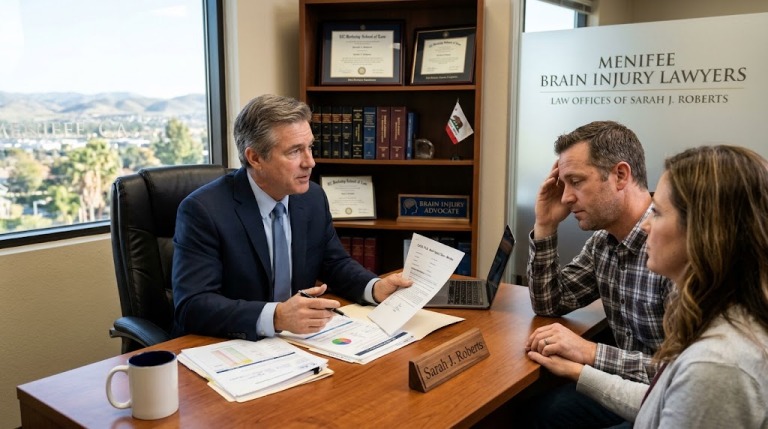
Injury law guide for Riverside County families
Brain Injury Lawyer Menifee: A Plain-English Guide for Injured Residents and Their Families
A brain injury rarely announces itself the way a broken arm does. Someone walks away from a crash on Newport Road, says they’re “just rattled,” and three weeks later can’t remember their own appointments. If that sounds familiar, a brain injury lawyer Menifee families can rely on is usually the person who turns a confusing, frightening situation into a documented legal claim.
This guide walks through how these cases actually work: what makes them harder than ordinary injury claims, what the law in California allows you to recover, which deadlines can end a case before it starts, and how to tell a capable Menifee brain injury lawyer from one who just advertises well. Read it start to finish or jump to the part you need.
Start here
Why a brain injury claim is not like other injury claims
If you break your leg, the X-ray shows the break, the cast shows the treatment, and nobody argues about whether you were hurt. Brain injuries almost never get that kind of easy proof. The damage is inside the skull, the symptoms drift in and out, and the person who is hurt is often the worst witness to their own condition because memory, judgment and insight are exactly what the injury affects.
That is the core reason people search for a brain injury lawyer Menifee has locally rather than any general practitioner. These claims turn on three problems that ordinary fender-bender cases don’t have.
The injury is hard to see
A mild traumatic brain injury, which includes most concussions, can leave a standard CT scan completely clean. That result gets quoted by insurance adjusters as if it settled the matter. It doesn’t. Doctors who treat head injuries know that structural scans miss many functional problems, which is why specialists lean on MRI, advanced imaging, and neuropsychological testing that measures memory, processing speed and attention directly.
The costs stretch for years
A sprained wrist heals and the bills stop. A moderate or severe brain injury can mean therapy for years, lost earning ability for decades, and in the worst cases lifelong supervision. Putting a fair number on that takes a life care planner, an economist and treating doctors who are willing to commit to a prognosis. A lawyer who has never priced a lifetime of care will almost always undervalue it, while an experienced brain injury lawyer Menifee has locally knows to plan for it from day one.
Causation gets fought hard
Because the symptoms (headaches, fog, mood swings, poor sleep) overlap with ordinary stress and other conditions, defense teams argue the crash didn’t cause them. Winning means building a record that ties the change in the person to a specific event on a specific date.
If you’re reading this for a spouse, parent or adult child who can’t manage the process themselves, that’s very common. Family members are often the ones who notice the changes first and the ones who end up hiring the brain injury attorney in Menifee on the injured person’s behalf.
Where it happens
How brain injuries happen in and around Menifee
Menifee has grown fast, and the roads, shopping centers and neighborhoods have had to catch up. Falls and vehicle collisions are among the leading causes of traumatic brain injury nationwide, and the local mix reflects that. A few patterns come up again and again.
Collisions on commuter corridors
Interstate 215, Newport Road, Menifee Road, Scott Road, Haun Road, McCall Boulevard and Highway 74 carry heavy commuter and delivery traffic every day. Rear-end crashes at signalized intersections, red-light runners, distracted drivers and speeding on long straight stretches all produce head trauma, even when the car looks only moderately damaged. The head doesn’t have to hit anything: the violent snap of the skull stopping while the brain keeps moving can be enough. If a crash is the starting point of your case, our overview of the car accident lawyer process covers the broader claim, and the brain injury issues in this article sit on top of it.
Big rigs, motorcycles, bikes and pedestrians
Freight moving along the I-215 corridor adds a different level of force. Head injuries in a truck accident tend to be severe because of the weight involved, and those cases bring in federal safety rules and commercial insurance policies. Riders face their own risk: even with a helmet, a motorcycle accident can cause serious brain trauma. People on foot or on two wheels have almost no protection, which is why pedestrian accidents and bicycle accidents so often involve head injuries. Rideshare crashes add another layer of insurance questions, covered in our rideshare accident guide.
Falls at stores, homes and care facilities
Menifee has many 55-plus communities, and older adults are especially vulnerable to falls that end in a head strike. When a wet floor, broken stair, poor lighting or an unrepaired walkway is to blame, the property owner may be responsible. Our guides on slip and fall claims and premises liability explain that side of the law, and nursing home abuse becomes relevant when a fall happens in a facility that failed to protect a resident.
Other sources
- Workplace accidents on construction sites and warehouses, where a falling object or a fall from height causes head trauma.
- Assaults and negligent security at bars, apartment complexes and parking lots.
- Sports and recreation injuries, including youth sports and e-bike or golf cart accidents.
- Medical errors, such as a missed stroke, oxygen deprivation during surgery, or injury during a difficult delivery.
The medical side
Types of brain injury and how severity is measured
You don’t need a medical degree to bring a claim, but a basic vocabulary helps when you talk to doctors, adjusters and the brain injury lawyer Menifee families turn to for help. Doctors commonly rate the initial severity of a head injury with the Glasgow Coma Scale, which scores eye opening, verbal response and movement from 3 (deepest impairment) to 15 (fully alert).
Glasgow Coma Scale, initial assessment
One caution: a “mild” label describes the first hours, not the long-term outcome. Plenty of people with a mild score at the scene live with real cognitive and emotional problems months later. Insurance companies like the word “mild.” Don’t let it shrink your claim.
| Injury type | What it generally means | Why it matters legally |
|---|---|---|
| Concussion | Temporary disruption of brain function from a blow or violent movement; may or may not involve loss of consciousness. | Often dismissed. Repeated documentation of symptoms is what keeps it from being minimized. |
| Contusion | Bruising of brain tissue, sometimes on the side opposite the impact (coup-contrecoup). | Visible on imaging in many cases, which helps prove injury. |
| Diffuse axonal injury | Widespread tearing of nerve fibers from rapid rotation or acceleration, common in high-speed crashes. | Can cause severe, lasting impairment despite subtle imaging. |
| Hematoma or hemorrhage | Bleeding in or around the brain, which may develop hours after the event. | Delayed bleeding is why prompt emergency care matters both medically and for the record. |
| Penetrating injury | An object breaks through the skull and enters brain tissue. | Usually severe, with major surgical and rehabilitation costs. |
| Anoxic or hypoxic injury | Brain damage from lack of oxygen, such as in near-drowning, cardiac events or surgical complications. | Not caused by impact, but still compensable when negligence is involved; often tied to medical malpractice. |
What to watch for
Symptoms people overlook until it’s late
Many people feel fairly normal for hours or even days after a head injury. Adrenaline, shock and pain medication cover a lot. Then the pattern shows up. The following are commonly reported, and any of them is a reason to see a doctor rather than wait it out.
Physical
- Headaches that don’t ease
- Dizziness or balance trouble
- Nausea or vomiting
- Light and noise sensitivity
- Ringing in the ears, blurred vision
- Unusual fatigue
Thinking and memory
- Trouble concentrating or following a conversation
- Forgetting recent events or instructions
- Slowed thinking, word-finding problems
- Difficulty organizing tasks or making decisions
Mood and behavior
- Irritability or sudden anger
- Anxiety, depression or flat emotions
- Personality changes noticed by family
- Withdrawing from friends and activities
Sleep and everyday function
- Sleeping far too much or too little
- Needing notes for things you used to handle easily
- Struggling at work after years of doing the job well
- Getting overwhelmed in noisy stores or crowds
Here is a practical point that lawyers see over and over: the injured person tends to underreport. They don’t want to seem weak, or they genuinely don’t recognize the change. A spouse who writes down what they see (missed bills, repeated questions, a short fuse that wasn’t there before) can supply the kind of observation a doctor and, later, a jury can use.
Persistent symptoms that last beyond the expected recovery window are sometimes called post-concussion syndrome. A good Menifee brain injury lawyer will want to know whether you have a diagnosis from a qualified specialist and not just a note that says “headache.”
When it’s an emergency: repeated vomiting, a severe or worsening headache, seizures, confusion, slurred speech, weakness on one side, unequal pupils or loss of consciousness need emergency care right away. Don’t wait for a legal appointment. This article is general information, not medical advice.
Timeline
The first days after a head injury
What you do early shapes the case later. None of this is complicated, but it’s easy to skip when you’re hurting and overwhelmed.
- Right awayGet medical care. Call 911 for anything that looks serious. Even if you feel okay, a head strike or a hard jolt deserves an exam, and the emergency record becomes the first official document linking your condition to the event.
- At the scene, if you canCollect the basics. Photos of vehicles, the road, the hazard that caused a fall, and visible injuries. Names and numbers of witnesses. The police report number. If you can’t do any of this, a family member can return to the scene later.
- Same day or nextTell the truth, briefly, and don’t guess. Report the incident to the proper party, but skip recorded statements to the other side’s insurer. You can say you’re injured and getting treatment, and leave it there.
- First weekFollow the treatment plan. Go to follow-ups. Gaps in care are the single easiest thing for an insurer to use against you, and for brain injuries a gap can look like recovery.
- First weekStart a symptom journal. A few lines a day: headaches, sleep, mood, memory slips, missed work, things you couldn’t do. Dated, plain and specific.
- First two weeksTalk to a lawyer. Video and surveillance footage is often overwritten within weeks, vehicle data can be lost when a car is repaired or scrapped, and a lawyer can send preservation letters that make destruction of evidence much harder to excuse.
Proof
Evidence that actually carries a brain injury case
When a case is built well, no single piece is doing all the work. Several layers of evidence point the same direction.
Medical records and imaging
Emergency room notes, hospital records, imaging reports and follow-up visits establish what happened and when. Where scans are clean but symptoms are real, additional studies and specialist evaluations matter. Neurologists, neuropsychologists, physiatrists and rehabilitation therapists all create records that carry weight because they’re made for treatment, not for litigation.
Neuropsychological testing
This is a set of structured tests that measure memory, attention, problem solving and processing speed against expected norms. For mild and moderate injuries it is often the most persuasive tool, because it turns “I can’t think like I used to” into numbers that a jury can understand.
Before-and-after witnesses
Coworkers, supervisors, teachers, friends and relatives can describe who the person was before the injury and what changed. Performance reviews, attendance records and old photos or messages help show the contrast. A skilled Menifee brain injury attorney will gather these early, while memories are fresh.
Proof of fault
- Police and incident reports, and photos of the scene.
- Surveillance and dashcam video, and nearby business footage, which is usually overwritten quickly.
- Vehicle event data recorders showing speed, braking and impact forces.
- Maintenance logs, driver logs and phone records in commercial and distracted driving cases.
- Inspection records and prior complaints in property cases.
Expert support
Larger cases often involve an accident reconstructionist, a neurologist, a neuropsychologist, a vocational expert who explains what work the person can still do, a life care planner who prices future care, and an economist who converts all of it into present dollars. Not every case needs every expert. The point of a good lawyer is knowing which ones are worth the cost.
Responsibility
Who can be held responsible for a brain injury
Fault is a legal question, not just a feeling about who was careless. In California, you generally need to show that someone owed you a duty of care, broke that duty, and that the breach caused your injury and losses. Depending on the facts, the responsible party might be:
- A driver who was speeding, texting, impaired or ran a signal.
- A trucking company that skimped on maintenance or pushed drivers past legal hours.
- A property owner or manager who ignored a known hazard or failed to provide adequate security.
- An employer or contractor that cut corners on safety. Workers’ compensation usually covers on-the-job injuries, but a separate claim against an outside company may still be possible. See our guides to work injury claims and workers’ compensation.
- A manufacturer of a defective helmet, vehicle component or piece of equipment.
- A doctor or hospital whose error caused oxygen loss or a missed diagnosis. These are medical malpractice cases and follow stricter rules. When the injury happens around delivery, the birth injury guide applies.
- A public agency responsible for a dangerous road, a malfunctioning signal or an unsafe public building. These claims have special notice rules, discussed below.
More than one party can share fault, which is common in multi-vehicle collisions and property cases. Identifying every responsible party early matters because each may carry a separate insurance policy, and it is one of the first things a brain injury lawyer Menifee residents consult will look into.
The rules
California laws that shape a brain injury claim
You don’t need to memorize statutes, but a few rules decide whether a case lives or dies. Because details change and exceptions are common, treat the following as orientation and have a licensed attorney confirm how it applies to you.
| Rule | What it generally says |
|---|---|
| Two-year filing deadline | Most personal injury lawsuits, including brain injury and wrongful death claims, must be filed within two years under Code of Civil Procedure section 335.1. |
| Delayed discovery | In some situations the clock may start when the injury was, or reasonably should have been, discovered. Don’t count on this; courts apply it narrowly. |
| Claims against public entities | A written government claim generally has to be presented within six months of the injury before a lawsuit can be filed. Missing this window can bar the case. |
| Injured children | The deadline is generally extended for minors, though special rules apply and waiting is risky. |
| Medical malpractice | Usually one year from discovery or three years from the injury, whichever comes first, with additional rules and caps on certain damages. |
| Comparative fault | California uses a pure comparative negligence system. If you were partly to blame, your compensation is reduced by your share of fault, but not eliminated. |
| Shared liability for non-economic damages | Each defendant is generally responsible only for its own percentage of fault when it comes to pain and suffering type damages, which makes finding every responsible party important. |
| Past medical bills | Under the Howell decision, recovery for past medical expenses is generally limited to amounts actually paid or owed, not the original billed price. |
Insurance limits can cap what’s collectible
California’s minimum auto liability limits were raised in 2025 to $30,000 per person and $60,000 per accident for injuries, with $15,000 for property damage. Those numbers fall far short of a serious brain injury. That’s why your lawyer will look beyond the at-fault driver’s basic policy: your own uninsured and underinsured motorist coverage, employer policies in work-related crashes, commercial policies for trucks and delivery vehicles, and umbrella coverage.
The deadline is the one rule you can’t fix later. If you are anywhere near two years from the injury, or six months in a case that involves a public agency, speak to a lawyer immediately.
Recovery
What compensation can cover
No two cases settle for the same amount, and anyone who promises a figure before reviewing your records is selling something. What can be said is which categories of loss the law recognizes. Our broader explainer on personal injury compensation covers the general framework. For brain injuries, the categories look like this.
| Category | Examples in a brain injury case |
|---|---|
| Medical expenses, past | Ambulance, emergency care, surgery, hospital stays, imaging, medications, therapy sessions already completed. |
| Medical expenses, future | Ongoing neurology visits, cognitive and speech therapy, counseling, medication, assistive devices, home modifications, attendant care. |
| Lost income | Wages missed during recovery, reduced hours, or a job that was lost because of cognitive or physical limits. |
| Lost earning capacity | The difference between what you could have earned over a career and what you can realistically earn now. |
| Pain, suffering and loss of enjoyment | Chronic headaches, anxiety, depression, inability to enjoy hobbies, strain on relationships. |
| Loss of consortium | A spouse’s claim for lost companionship, intimacy and support caused by the injury. |
| Wrongful death | If the injury is fatal, certain family members can pursue funeral costs, lost financial support and loss of the relationship. See our wrongful death guide. |
Liens, benefits and the money you actually keep
The headline number isn’t what lands in your pocket. Health insurers, Medi-Cal, Medicare and hospitals may assert liens against a settlement, and attorney fees and case costs come out too. A capable lawyer negotiates those liens down where possible. If your injury prevents you from working long term, you might also qualify for federal disability benefits. Our overview of Social Security disability explains how that process runs alongside an injury claim, and why the benefits don’t replace a lawsuit against the person who caused the harm.
A brain injury lawyer in Menifee should be able to walk you through a rough net-recovery picture before you accept any offer. If someone can’t explain how liens work, keep looking.
The other side
How insurance companies push back on brain injury claims
Adjusters are trained, polite and fast. They’re also working for a company that profits when claims are small. Knowing the common moves takes away much of their power.
- “Your scan was normal.” This one comes up constantly. The answer is functional testing, specialist opinions, and a clear symptom timeline.
- “It was a minor impact.” Vehicle damage is a poor predictor of head injury. Forces on the brain depend on rotation and sudden deceleration, not just on dents.
- “This was pre-existing.” Prior headaches, anxiety or ADHD get pulled out and blamed. California law lets you recover when an accident aggravates a prior condition, but you’ll need records showing how you functioned before.
- “You waited too long to see a doctor.” Delays and treatment gaps are exploited. Explain them honestly and keep care consistent going forward.
- Social media. A photo at a family barbecue becomes “proof” you’re fine. Assume everything you post could be screenshotted and misread.
- Quick low offers. Early settlements arrive before the long-term picture is known. Once you sign a release, you can’t go back for more when symptoms turn out to be permanent.
- Recorded statements. You aren’t obligated to give one to the other driver’s insurer, and anything vague or off-the-cuff can be used against you.
Your own insurer is a different situation, since your policy usually requires cooperation, but even then it’s smart to have a brain injury lawyer Menifee clients rely on review what you say and sign.
The work
What a brain injury lawyer Menifee clients hire actually does
From the outside, a legal case looks like a long wait followed by a check. On the inside there’s a lot happening, and understanding it helps you judge whether the person you hire is doing the work. Here is how a well-run case usually moves.
Intake and investigation
The first consultation is about facts: what happened, what treatment you’ve had, who was involved and what insurance exists. The lawyer then sends preservation letters, requests reports, obtains video, and, when needed, brings in an investigator or reconstructionist.
Building the medical case
Your lawyer coordinates with treating providers, gathers records and bills, and makes sure the right testing has been done. This stage often decides the strength of the case. It’s also where an experienced personal injury lawyer with real brain injury experience earns their fee, because they’ll know what a defense expert will attack.
Waiting for the right moment to negotiate
Good lawyers don’t settle until you have reached maximum medical improvement or, at least, the long-term outlook is reasonably clear. Settling too early is the most common way a serious claim gets undervalued. That can mean a case stays open for a year or longer, and complex ones take more time.
Demand, negotiation and, if needed, a lawsuit
Once the facts and damages are documented, your lawyer sends a detailed demand to the insurers. Most cases resolve through negotiation or mediation. If the other side refuses a fair deal, a lawsuit can be filed in Riverside County Superior Court. Filing doesn’t mean you’re headed for a trial tomorrow: it starts discovery, depositions and expert disclosures, and a great many cases still settle along the way. A trial lawyer who is ready to go to court tends to get better offers than one who isn’t.
Protecting your interests along the way
Your lawyer also handles liens, advises on benefits, and, when the injured person lacks capacity or is a minor, may help arrange court-approved settlements and structured arrangements that protect the money for the long term.
Decision
Choosing a brain injury lawyer Menifee families can trust
Searching for a Menifee brain injury lawyer brings up a wall of ads and glossy promises. Look past the slogans. A few practical questions separate a firm that handles these cases from one that merely accepts the call.
| Ask this | What a good answer sounds like |
|---|---|
| How many brain injury cases have you handled? | Specific, honest experience with TBI, including cases that involved experts and went past the demand stage. |
| Will you try the case if it doesn’t settle? | A confident yes, with examples. Insurers keep track of who actually goes to court. |
| Who will work on my file day to day? | A clear answer about the attorney and staff, and how often you’ll get updates. |
| How are fees and costs handled? | A written contingency agreement that explains the percentage, who fronts costs, and how costs are repaid. |
| What experts would you likely use? | Names of specialties, not vague talk. Neurology, neuropsychology and life care planning should come up for serious injuries. |
| What are the weak points of my case? | Candor. A lawyer who only tells you good news hasn’t looked closely enough. |
Most injury attorneys offer a free initial consultation and work on contingency, which means they get paid only if they recover money for you. That arrangement lets people with mounting medical bills get representation without paying anything upfront. Read the fee agreement carefully and ask about case costs, since those are separate from the attorney’s percentage.
Proximity helps, but it isn’t everything. A lawyer familiar with Menifee and Riverside County courts will know the local roads, the hospitals, the judges and the insurers’ habits. Many firms also work with clients from nearby communities, including Murrieta, Temecula, Wildomar, Lake Elsinore, Perris, Hemet, Sun City, Canyon Lake, Romoland and Winchester. If you’d like to compare options, our directory of personal injury lawyers is a place to start.
Trust your read on the person, too. You’ll be sharing medical and personal details, possibly for years. You want someone who explains things plainly, returns calls and treats you like a person instead of a file number.
Avoid these
Mistakes that quietly weaken a claim
Most people who run into trouble didn’t do anything dramatic. They did small, understandable things that handed the other side an argument.
Before you hire a lawyer
- Saying “I’m fine” at the scene or on a call with an adjuster
- Skipping the doctor because the symptoms seem mild
- Giving a recorded statement to the other insurer
- Posting about the accident or your activities online
- Accepting a first offer to make the bills stop
After you hire one
- Missing therapy or specialist appointments
- Not telling your lawyer about prior head injuries or conditions
- Letting the symptom journal slide
- Discussing the case with coworkers or on social media
- Switching doctors without letting your lawyer know
Prior injuries deserve a specific mention. People sometimes hide an earlier concussion or a history of migraines because they fear it will sink the case. It almost always comes out, and discovering it late is far worse than disclosing it early. A brain injury lawyer Menifee residents hire can work with a prior history, but can’t work around a surprise.
FAQ
Questions people ask about a brain injury lawyer in Menifee
How much does a brain injury lawyer Menifee residents hire cost?
Many firms take brain injury cases on a contingency basis, so there’s no upfront fee and the lawyer is paid a percentage only if there’s a recovery. Case costs, such as expert fees and records, are handled differently from firm to firm, so ask for the agreement in writing and have it explained before you sign.
How long do I have to file a brain injury lawsuit?
In most California cases, two years from the date of injury. Claims against a government agency generally require a written claim within six months, and medical malpractice has its own shorter timeline. Because exceptions are narrow, it’s safest to talk to a lawyer well before any of these dates arrive.
Can I have a case if my CT scan was normal?
Yes. Many mild traumatic brain injuries don’t show up on a routine CT. Cases in this situation are usually built on MRI or advanced imaging when appropriate, neuropsychological testing, specialist evaluations and consistent documentation of symptoms.
What if the symptoms showed up days or weeks after the accident?
Delayed symptoms are common and don’t automatically hurt your case, but the gap needs to be explained and medically documented. See a doctor as soon as symptoms appear and tell them about the earlier accident.
What if I was partly at fault?
California follows pure comparative negligence. You can still recover, but your award is reduced by your percentage of fault. Insurers sometimes exaggerate the injured person’s share, so a lawyer’s review of the facts can matter a lot.
How long will a brain injury case take?
It depends on the severity, how long medical treatment lasts, how contested fault is and whether a lawsuit is needed. Straightforward cases may resolve within a year or so. Serious or disputed cases often take longer, because a lawyer will want your long-term medical picture to be clear before putting a value on the claim.
Can family members bring a claim too?
A spouse may have a separate loss of consortium claim, and certain relatives can bring a wrongful death claim if the injury is fatal. Parents can pursue claims on behalf of an injured child, and a court may need to approve settlements involving minors or people who lack capacity.
Should I talk to the other driver’s insurance company?
It’s best not to give a recorded statement or sign any release before you’ve had the chance to talk to a lawyer. You can provide basic contact information and say you’ll follow up. Your own insurer may require cooperation under your policy, so review what you’re asked to do.
What if the person with the brain injury can’t handle the case?
When an injury affects judgment or memory, family members often step in. Depending on the circumstances, a court may be asked to appoint a guardian or conservator or approve a settlement. Our overview of guardianship explains how that works.
When should I contact a brain injury lawyer Menifee has available?
As soon as you can after getting medical care. Early contact lets a lawyer preserve evidence, guide you through the insurer’s calls and help avoid mistakes. There’s rarely a downside to a free consultation.
Talking to a brain injury lawyer Menifee residents trust starts with one conversation
If you or someone you love has a head injury after a crash, a fall or a medical mistake, you don’t have to figure out the legal side alone while you’re focused on recovery. Write down what happened, keep every record, follow your doctor’s plan, and speak to a qualified brain injury attorney in Menifee before you talk to an insurer or sign anything.
You can browse local personal injury lawyers, read more in our personal injury legal topics, or contact us with a question. Most firms will review your situation for free, and a short call can tell you whether your claim is worth pursuing and how much time you have.
This article is general legal information, not legal advice, and reading it doesn’t create an attorney-client relationship. Laws and deadlines change and depend on the facts of each case. Speak with a licensed California attorney about your situation, and seek medical care for any head injury.